
Substation Equipment
Electrical substation equipment is really important for getting electricity from one place to another. It also helps control. Protect the power. If you have seen a substation with high voltage and wondered what all the machines do, this guide will help you understand what the main parts of a substation are and what they do in a simple way.
A power substation is like the boss of the grid. It has parts, like transformers, circuit breakers, relays, busbars, and isolators, that all work together. These electrical substation components make sure the power gets to where it needs to go. They also help control the voltage and protect the system from faults. Electrical substation equipment is very important for all of this to work properly.
What Is Electrical Substation Equipment?
Ever wondered what actually sits inside a substation, keeping the lights on across a city? That’s substation equipment—the collective term for everything installed there to handle voltage changes, fault protection, switching, measurement, and communication between devices.
Broadly, engineers split this equipment into two buckets.
First up is primary equipment. Think of it as the heavy lifter of the substation—anything that directly handles the generation, transmission, or distribution of power at high voltage sits in this group. Transformers. Circuit breakers. Isolators. These aren’t just parts on a list; they’re the actual machinery doing the hard work of moving electricity from one point to another.
Secondary equipment is a different story. It runs quietly in the background, usually at much lower voltage, and its whole purpose is to keep an eye on the primary side rather than carry power itself. Monitoring conditions, controlling operations, protecting against faults, sending information back and forth — that’s what it’s built for. Relays fall under this. So do control panels. Batteries too.
Neither group works in isolation. A substation stays stable and safe only because primary and secondary systems constantly coordinate with each other. Miss one link—a faulty relay, an aging isolator—and the whole reliability picture starts to wobble. That’s really why this equipment matters so much: it’s not glamorous, but it’s the backbone that keeps power flowing without anyone downstream ever noticing a hiccup.
Substation Equipment List
| Equipment | Primary / Secondary | Core Function |
| Lightning Arrestor | Primary | Surge protection |
| Transformer | Primary | Voltage step-up / step-down |
| Instrument Transformer (CT/PT) | Primary | Measurement & protection |
| Circuit Breaker | Primary | Fault interruption |
| Isolator (Disconnector) | Primary | Safe isolation for maintenance |
| Bus Bar | Primary | Current distribution junction |
| Wave Trap | Primary | High-frequency wave filtering |
| Capacitor Bank | Primary | Power factor correction |
| Relay | Secondary | Fault sensing & tripping command |
| Control & Relay Panel | Secondary | Centralized monitoring & control |
| Battery / DC System | Secondary | Emergency & control power |
| Indicating & Metering Instruments | Secondary | Real-time parameter monitoring |
| Earthing System | Secondary | Equipment and personnel safety |
| Carrier-current Equipment | Secondary | Communication & supervisory control |
1. Lightning Arrester
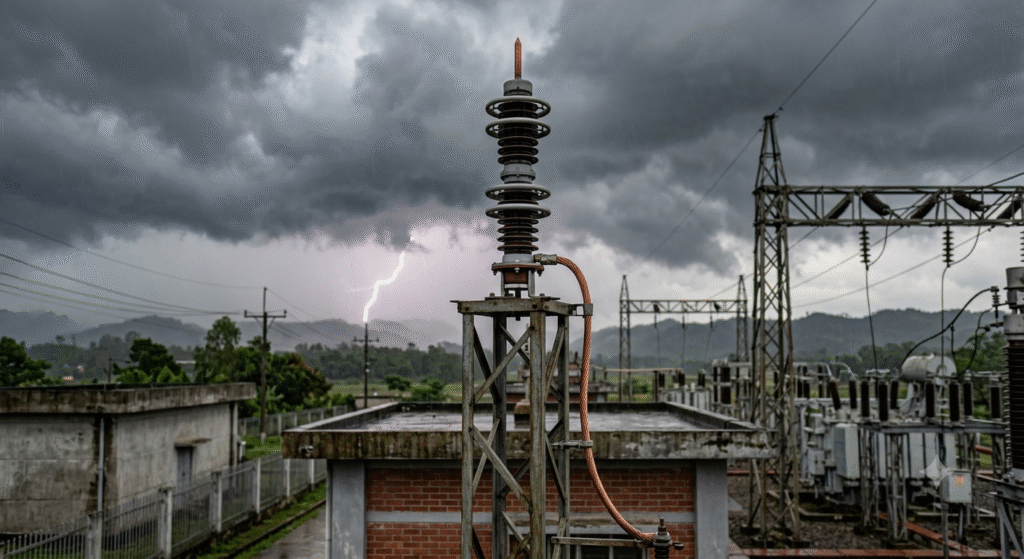
A lightning arrestor is a device that protects the equipment in substations from spikes in voltage. These spikes can happen when lightning hits. They can also happen when power is switched on or off. The lightning arrestor is usually placed near where the power lines come into the substation. This helps stop the voltage from getting to the equipment in the substation. The lightning arrestor is very important for the substation.
When lightning hits the substation, the lightning arrestor quickly sends the electricity to the ground. This keeps the parts of the substation like the transformers, circuit breakers, insulators and busbars from getting badly damaged. Lightning arrestors are used with levels of voltage like 11 kV, 33 kV, 132 kV and 220 kV substations.
It is really important to choose the right lightning arrestor rating for the lightning arrestor. This helps keep the system safe, protects the insulation and makes sure the power transmission is reliable. The lightning arrestor plays a role in keeping the electrical substation running smoothly.
2. Power Transformer
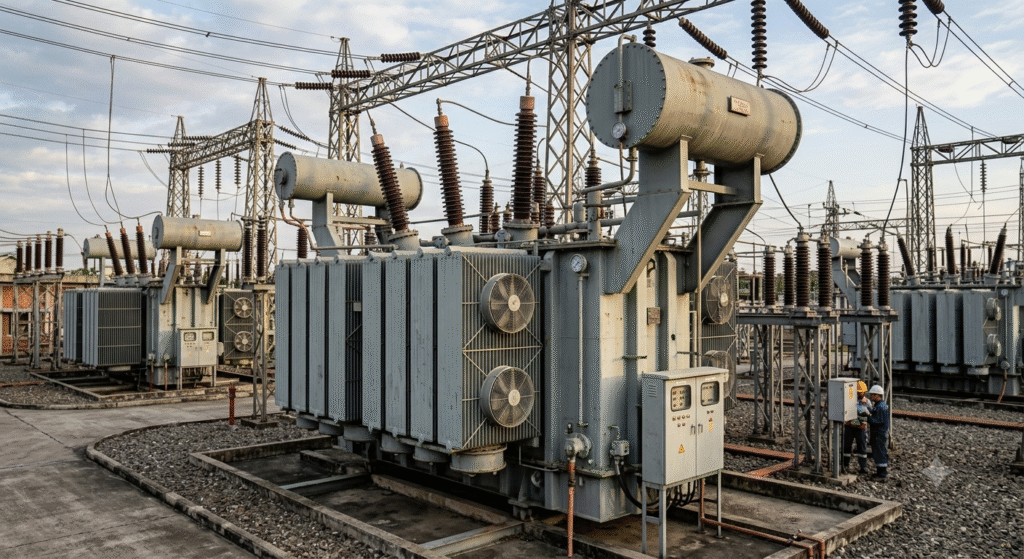
The power transformer is one of the important parts of an electrical substation. It changes the voltage levels for power transmission and distribution.
The power transformer increases the voltage for long-distance transmission, & the distribution transformer changes high voltage to low voltage for household use.
In substations different types of transformers are used. They are used based on voltage level and load capacity.
Oil-cooled distribution transformers are commonly used. They provide cooling and reliable performance during continuous operation.
The power transformer helps reduce transmission losses. It also improves the efficiency of the power system. This makes the power transformer the backbone of every substation.
3. Instrument Transformers — Current Transformer (CT) and Potential Transformer (PT)
Instrument transformers are used in substations. They reduce current and voltage into safe values. This is for measurement and protection systems. They help meters, relays and monitoring devices operate safely. They do this in high-voltage power systems.
A Current Transformer (CT) reduces current values. A potential transformer (PT) reduces voltage values. CTs are connected in series. PTs are connected in parallel with the circuit. CTs and PTs also provide isolation. They do this between high-voltage equipment and low-voltage control systems. This improves both safety and system protection.
4. Circuit Breaker
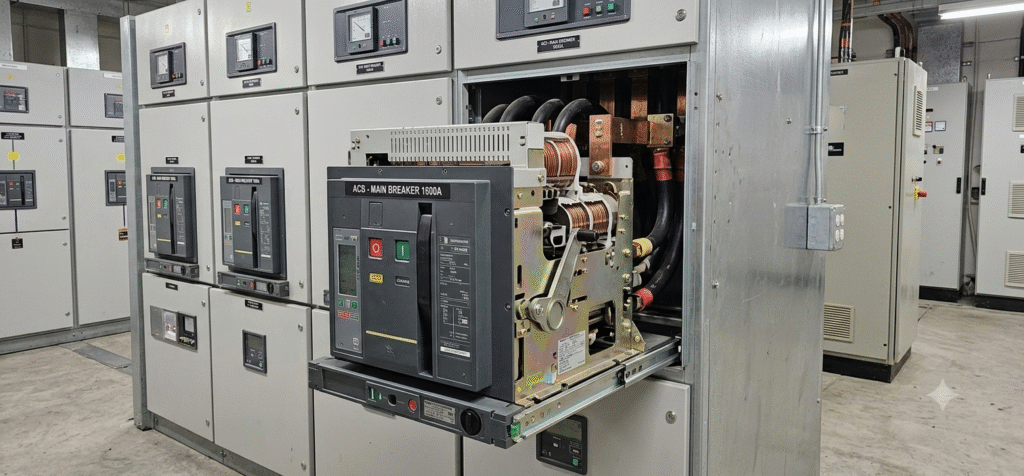
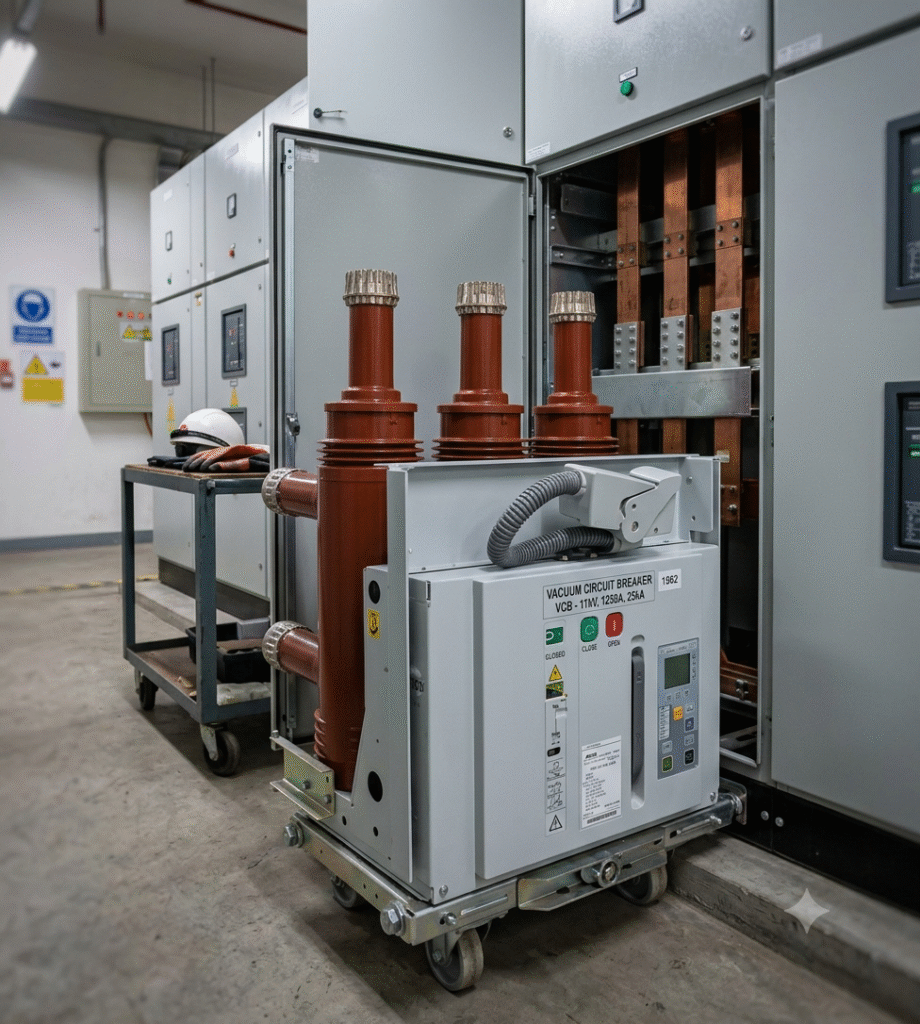
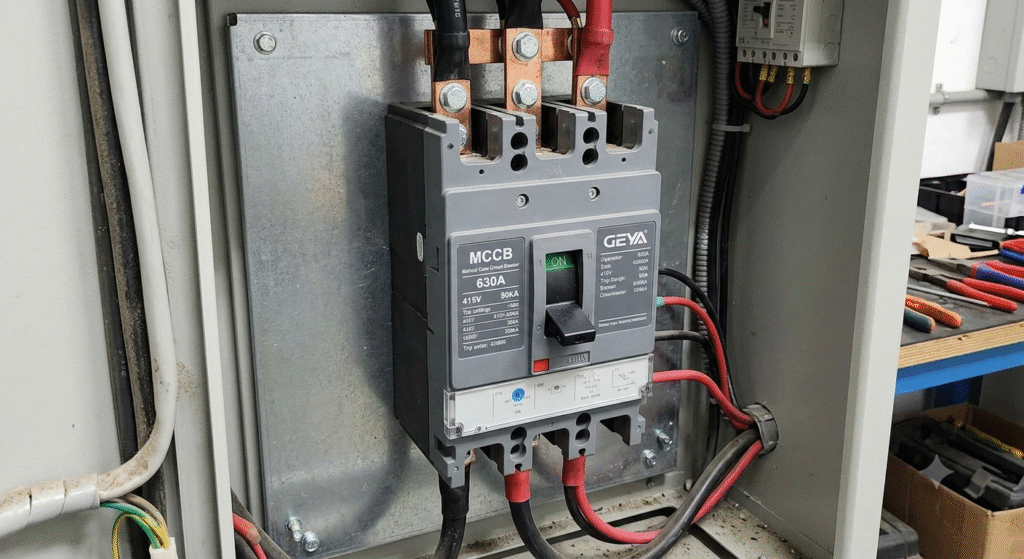
A circuit breaker is a protection device. It is used in substations. It stops the flow of current during faults. These faults can be circuits or overloads. It automatically disconnects the section. This protects transformers, cables and other equipment from damage.
When a protection relay detects a fault, it sends a trip signal to the circuit breaker. The circuit breaker then interrupts the current within milliseconds. Unlike isolators, circuit breakers can safely break current under load conditions. They are designed to extinguish arcs. Common types of circuit breakers used in substations include vacuum circuit breakers and SF6 circuit breakers. They are used depending on the system voltage and application.
5. Isolator (Disconnector Switch)
An isolator is a switching device. It is used in substations. It physically disconnects a section of the system. This is for maintenance and safety purposes. It is operated when there is no current flow in the circuit. This is usually after the circuit breaker has already opened.
Unlike circuit breakers, isolators do not have arc-extinguishing capability. So they must never be operated under load conditions. Their main purpose is to provide a break in the circuit. This ensures that maintenance work can be done safely. It can be done on substation electrical devices.
Isolators are commonly used in configurations. These include centre brake, double brake and pantograph types. They can be operated manually or through motorised systems. This depends on the substation design.
6. Bus Bar
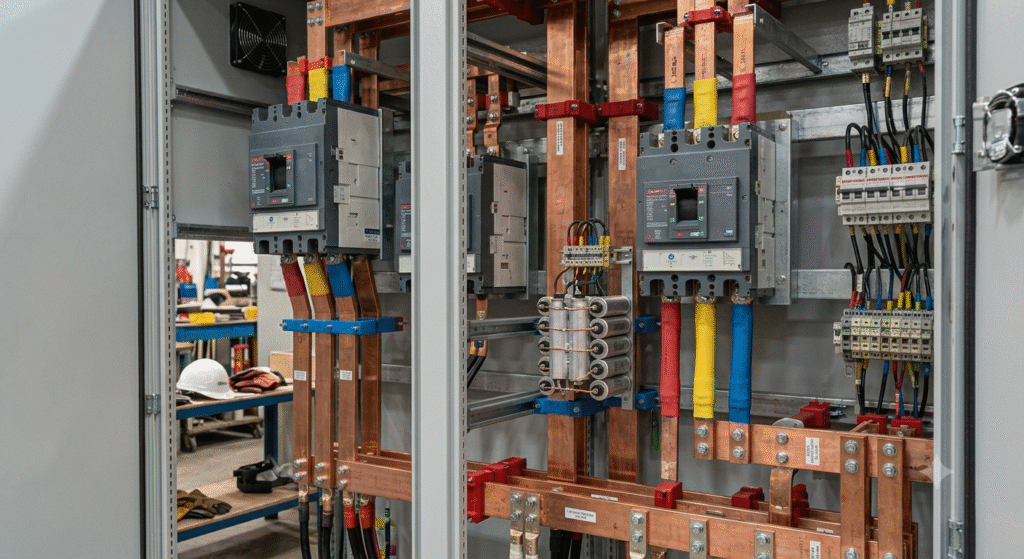
A bus bar is a part of an electrical substation. It works as an electrical connection point. It is for all outgoing circuits. It collects power from sources like transformers. It distributes it to feeders. Bus bars are usually made of aluminium or copper. They provide conductivity with low power loss and cost efficiency.
Proper design and sizing are very important. This is to avoid overheating and system failure. When a fault occurs on a bus bar, all connected circuits are quickly disconnected. This is using protection systems. It ensures safety. Prevents damage. Bus bars play a role in the power distribution. They also play a role in the stability of electrical substation components.
7. Protection Relay
A protection relay is a device that controls an electrical substation. It always checks parameters like current, voltage and frequency to find any problems in the system.
When something goes wrong, like too much current or a short circuit, the relay sends a signal to the circuit breaker to shut off the faulty part and protect the equipment.
Modern digital relays are more advanced. Can work fast, record faults and talk to SCADA systems. There are types of relays, including overcurrent, differential, distance and earth fault relays.
8. Capacitor Bank
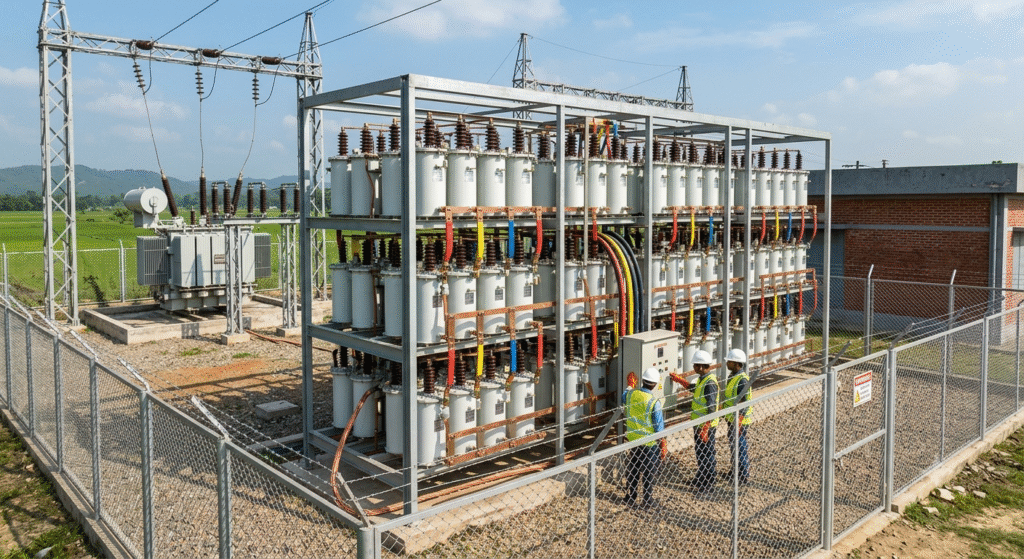
A capacitor bank is an electrical device. It is used in substations. It is a group of capacitors connected together. They work as a single unit. Its main purpose is to improve the power factor of the system. A low power factor causes extra current to flow. This increases losses and reduces efficiency. A capacitor bank corrects this by supplying reactive power locally.
They are connected in parallel with the load. They can be fixed or switchable. Switchable capacitor banks are connected or disconnected depending on system requirements.
Protection relays are used to protect capacitor banks from faults. If a fault occurs, the protection system quickly disconnects it. This prevents damage to the equipment. Capacitor banks play an important role in improving the efficiency and stability of the power system.
9. Earthing System
Earthing is the safety base of a substation. It connects all metal parts, structures and equipment to the ground so that fault current can safely flow into the earth.
During a fault the earthing system helps protect people and electrical substation equipment by reducing shock risk and allowing the protection system to work correctly.
A proper earthing system uses buried conductors and earth electrodes to keep resistance low. It is very important for reliable substation operation.
Key Selection Criteria for Substation Components
Picking the right components isn’t just a matter of matching voltage ratings. There’s more to it than that. Several technical factors come into play if you want the system to actually hold up under real operating conditions.
System voltage level — Equipment must be rated for the system voltage, not just nominal voltage
Short-circuit current rating — Circuit breakers and busbars must withstand maximum fault current
Environmental conditions — Temperature, humidity, pollution level and seismic zone must be considered
Cooling requirements — Large transformers need cooling systems like oil or forced cooling
Accuracy class — CT/PT and metering instruments must match protection or metering accuracy requirements
Maintenance access — Proper clearance and access must be planned for safe maintenance
Common Maintenance Oversights That Cause Substation Failures
Most substation failures don’t actually come from defective equipment. They come from maintenance that’s poor, or maintenance that’s simply too late.
Battery systems — Old or weak batteries can fail to support breaker tripping; regular capacity testing is
Relay settings—Incorrect or outdated settings after system changes can cause protection failure
Earthing resistance: Increases over time due to soil and corrosion; should be tested regularly
Isolator contacts — Dirt and oxidation can cause overheating; require cleaning and inspection
Frequently Asked Questions About Substation Equipment (FAQ)
What is the important piece of equipment in a substation?
The protection relay and circuit breaker together form the core of a substation handling system protection and voltage transformation.
What is the difference between a circuit breaker and an isolator?
A circuit breaker can interrupt current during faults or loads, while an isolator is only used for disconnection after power is off.
Why is power factor correction important in a substation?
It reduces power losses. Improves system efficiency, and capacitor banks help maintain a better power factor.
What voltage levels are substation equipment for?
Common levels include 11 kV, 33 kV, 66 kV, 132 kV, 220 kV and 400 kV, depending on system design.
How does a protection relay communicate with a circuit breaker?
A protection relay detects faults using CT/PT signals. Sends a trip command through the DC system to open the circuit breaker.
Final Thoughts
Understanding electrical substation equipment is essential for anyone working in the power sector from design and procurement to operation and maintenance. Each component in a substation plays a role, and even a small failure can affect the entire system.
A reliable substation depends on selected equipment, proper installation, regular maintenance and skilled operation. When every electrical substation component works together effectively, it ensures a continuous power supply.
