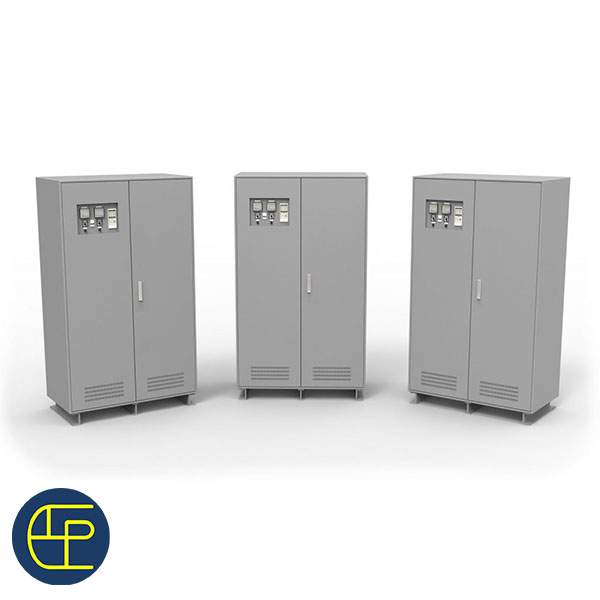
Automatic Voltage Regulation You Can Rely On
At Integrated Power & Engineering, we work closely with factories, hospitals, commercial buildings, and infrastructure projects that face one common challenge every day—unstable voltage.
In Bangladesh, low voltage during peak hours, sudden surges, and frequent fluctuations are more than an inconvenience. They damage equipment, disrupt operations, and shorten the life of expensive machines. Our AVR / IVS Voltage Stabilizers are designed to solve exactly this problem by delivering steady, reliable voltage to your electrical system, no matter how unstable the incoming supply may be.
What an AVR / IVS Really Does
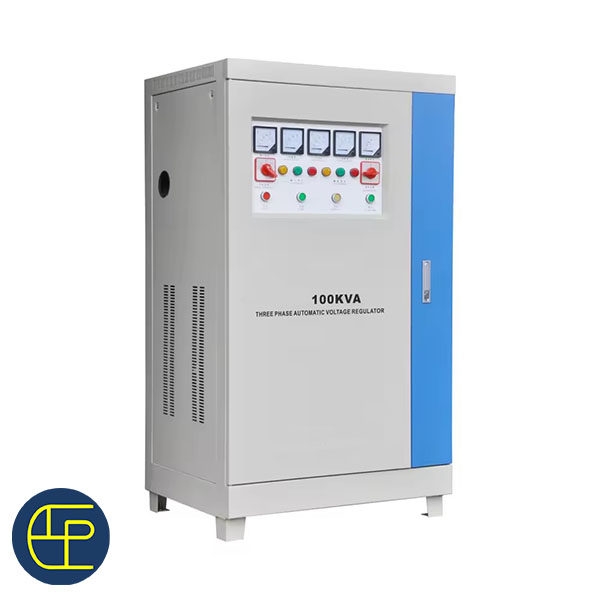
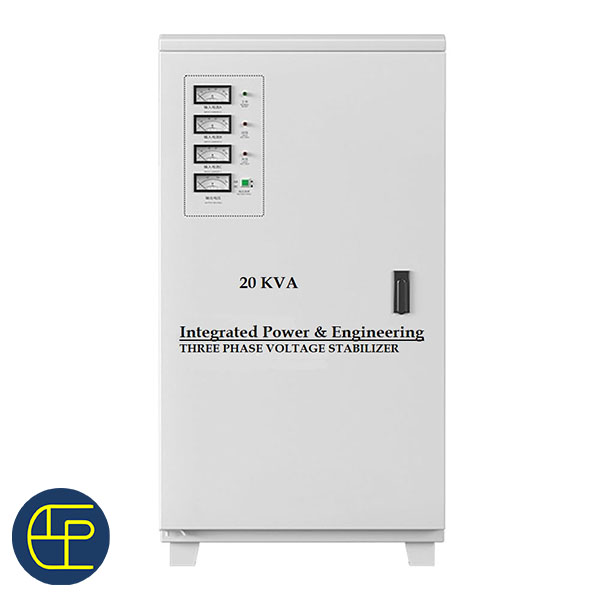
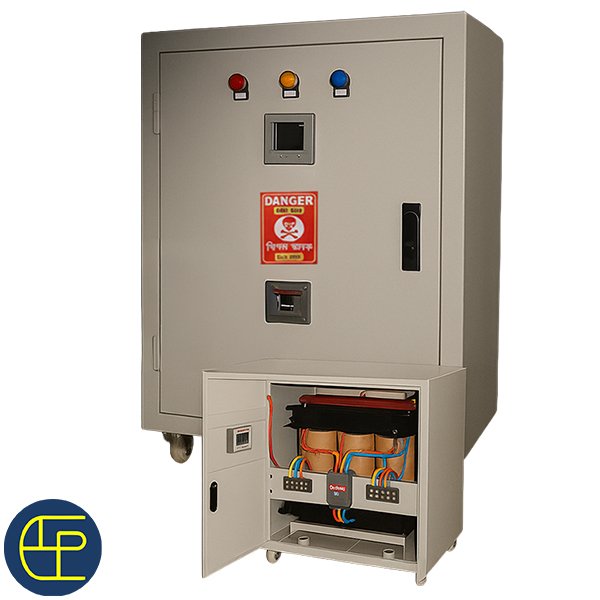
An AVR / IVS Voltage Stabilizer continuously monitors your incoming power and automatically corrects voltage variations before they reach your equipment.
It quietly protects your system from:
- Low voltage that overheats motors and trips machines
- Over-voltage that damages electronics and control panels
- Sudden dips and surges that interrupt production
Whether you need to protect one critical machine or an entire facility, we design stabilizers that fit your real operating conditions—not generic assumptions.
Built Around Your Actual Load
No two sites have the same voltage problem. That’s why we don’t believe in one-size-fits-all stabilizers.
Capacity
- From 1 kVA to 2000+ kVA, designed around your actual connected load and future expansion
Input Voltage Range
- Custom input ranges such as ±15%, ±20%, or wide-range designs
- Matched to the fluctuation pattern you experience on-site
Output Voltage
- Stable output set to your requirement
(220 V / 230 V / 400 V / 415 V) - Tighter regulation available for sensitive and mission-critical loads
Phase & Frequency
- Single-phase or three-phase
- 50 Hz operation
Technology That Matches the Job
Depending on how fast and how critical your voltage correction needs to be, we offer:
- Servo-controlled stabilizers for industrial and high-capacity applications
- Static stabilizers for fast response and highly sensitive equipment
Cooling can be air-cooled or oil-cooled, selected based on rating, duty cycle, and site environment.
Protection That Actually Matters
Our stabilizers don’t just regulate voltage—they help protect your entire electrical system:
- Over-voltage and under-voltage protection
- Overload and short-circuit protection (as required)
- Surge protection options
- Manual or automatic bypass for maintenance or emergency operation
- Clear alarms and indications so your team always knows system status
Enclosures are available for indoor or outdoor installation, with IP ratings selected to suit real site conditions.
Why Stable Voltage Makes a Real Difference
When voltage stays within limits, you’ll notice:
- Motors run cooler and last longer
- CNC machines and PLC systems operate more accurately
- Medical and laboratory equipment remain reliable
- Fewer nuisance trips and unplanned shutdowns
- Lower maintenance and replacement costs over time
It’s not just about protection—it’s about smooth, predictable operation.
Where Our Stabilizers Are Commonly Used
- Industrial plants and manufacturing lines
- Commercial buildings and shopping complexes
- Hospitals, diagnostic centers, and laboratories
- Data centers, telecom, and IT facilities
- Hotels, airports, metro and rail projects
- Elevators, HVAC systems, CNC and machine tools
If your site regularly suffers from voltage fluctuation or low voltage, an AVR / IVS can make an immediate difference.
Why Clients Choose Integrated Power & Engineering
- We design around your site, not a standard table
- We use reliable components proven in local conditions
- Our focus is on protection, reliability, and long service life
- You get local engineering support in Bangladesh
- Suitable for single equipment or complete facility stabilization