Introduction
A 300 watt solar panel sits right in that sweet spot many homeowners and small businesses in Bangladesh actually need. It offers enough output for meaningful savings, without the higher upfront cost of bigger commercial-grade panels. This guide walks through what makes this wattage tick, how it compares to other sizes, what it actually costs, and what to check before buying one.
By the end, you’ll understand the real-world output of this panel size, how many you’d need for a typical home, and which specifications actually matter versus which ones are just marketing noise. Whether you’re planning a small rooftop setup or comparing quotes from multiple suppliers, having a clear picture of what “300 watts” really means in practice makes the whole buying process a lot less confusing.
What Is a 300 Watt Solar Panel?
A 300 watt solar panel is rated to produce 300 watts of power under Standard Test Conditions (STC). That means full sun, a specific panel temperature, and a set angle of light. In everyday conditions, actual output usually runs a bit lower due to weather, dust, shading, and panel angle.
Most panels in this wattage range use either monocrystalline or polycrystalline cells. A monocrystalline version tends to be more efficient and slightly smaller in physical size. A polycrystalline version is usually a bit cheaper but takes up more roof space for the same output.
Here’s a quick look at typical specifications for this wattage class:
| Specification | Typical Value |
| Rated power | 300W |
| Panel efficiency | 17%–20% (monocrystalline higher) |
| Voltage (Vmp) | Around 32–36V |
| Current (Imp) | Around 8.3–9.4A |
| Panel dimensions | Approximately 1.6m x 1.0m |
| Weight | 18–22 kg |
| Warranty | 10–12 years product, 25 years performance (typical) |
How This Panel Actually Generates Power
The core technology hasn’t changed much in recent years, even as efficiency has crept upward. Sunlight hits the silicon cells inside the panel, knocking electrons loose and creating a flow of direct current (DC) electricity. That DC power then passes through an inverter, which converts it into the alternating current (AC) your home appliances actually use.
A few things affect how close a panel gets to its rated 300-watt output in real life. Temperature plays a role — panels actually lose some efficiency as they get hotter, despite the common misconception that more heat means more power. Angle and orientation matter too, since panels tilted toward the sun’s average position perform noticeably better than flat-mounted ones. Shading is another factor worth watching closely; even partial shade on one cell can drag down output for the entire panel string. Dust and dirt accumulation can cut output by 5%–15% if panels go uncleaned for several months, and cable or inverter losses add up as well, since a well-designed system loses less power between the panel and the outlet.
Monocrystalline vs Polycrystalline at This Wattage
Both cell types show up at 300 watts. The real choice usually comes down to one trade-off: budget versus space.
- Monocrystalline — higher efficiency, better in low light, smaller footprint, costs more per watt
- Polycrystalline — cheaper, takes up a bit more space for the same output, struggles slightly more in high heat
- Bifacial options — some panels now catch light from both sides, adding a modest output boost when mounted right
- Half-cut cell technology — increasingly standard at this wattage, cuts down on power loss from partial shading
Tight rooftop space usually points toward monocrystalline. Ground-mounted systems, where space isn’t the constraint, often get better value from polycrystalline instead.
300 Watt Solar Panel Price in Bangladesh
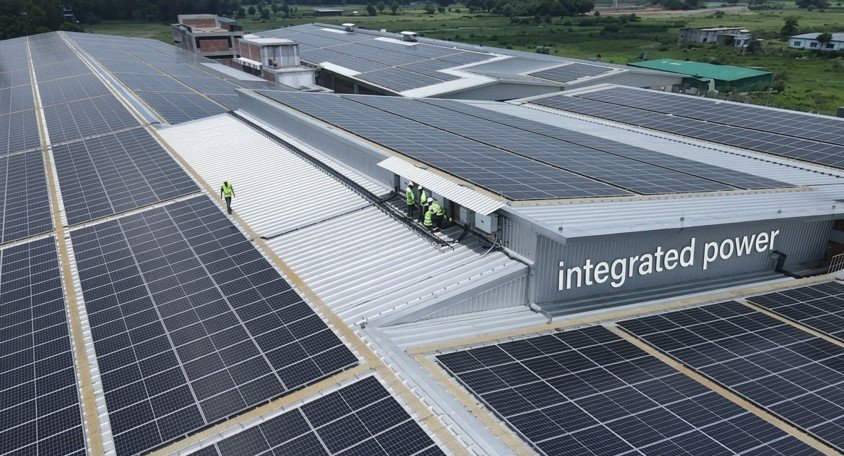
Pricing varies by brand, cell type, and where you’re buying from — importer, local assembler, or international brand distributor.
| Panel Type | Approximate Price Range (BDT) |
| Local/generic polycrystalline | ৳9,000–৳13,000 |
| Branded polycrystalline (Tier-1) | ৳13,000–৳17,000 |
| Monocrystalline (standard) | ৳14,000–৳19,000 |
| Monocrystalline (premium/bifacial) | ৳18,000–৳25,000+ |
These figures are indicative market ranges, not fixed prices. Actual quotes shift with import duties, exchange rates, order quantity, and current global panel prices, which have fluctuated significantly in recent years. Buying in bulk for a larger installation typically brings the per-unit price down noticeably compared to buying a single unit.
How Many Panels Does a Home Need?
This depends entirely on your household’s electricity consumption, not just a fixed number.
- A small home using around 5–6 units (kWh) per day typically needs 4–6 panels of this size
- A medium household using 10–12 units per day often needs 8–10 panels
- Actual panel count also depends on average daily sunlight hours in your area — Bangladesh averages roughly 4.5–5 peak sun hours
- System losses from inverter efficiency, wiring, and dust typically reduce real output by 15%–20% from the rated figure
A rough rule of thumb: one panel of this wattage produces roughly 1.2–1.5 kWh per day under good Bangladesh sun conditions, though this varies by season and location. Someone sizing a system for the first time should always start from actual monthly electricity bills rather than guessing at consumption.
Where This Panel Size Fits Best
This wattage class works well across several common use cases.
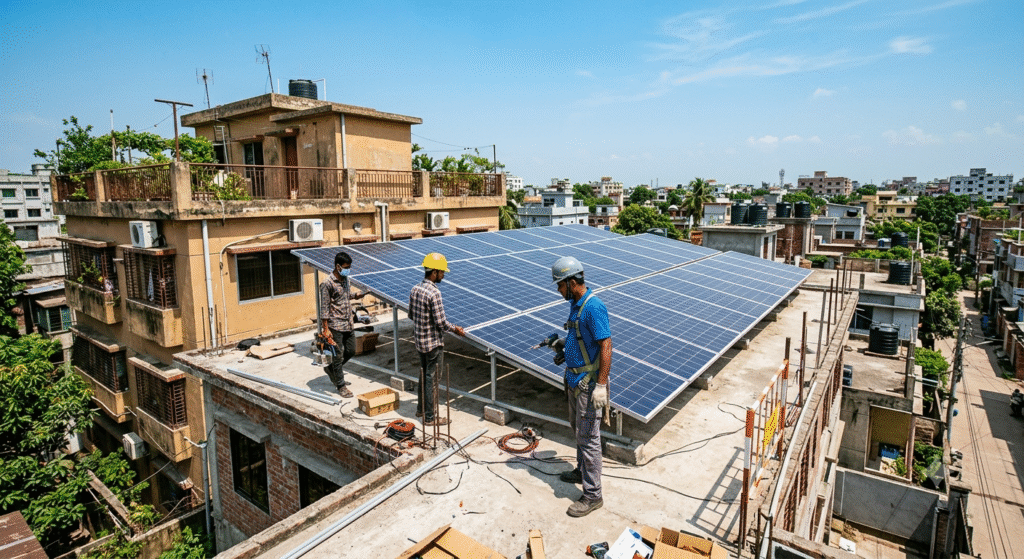
- Home rooftop systems — a manageable size for residential installations without needing a huge roof
- Small offices and shops — enough capacity to offset daytime electricity use
- Irrigation pumps — commonly paired in arrays to run mid-sized water pumps
- Off-grid cabins or remote setups — paired with battery storage for basic lighting and appliances
- Hybrid systems — combined with grid power and battery backup for load-shedding protection
Larger commercial or industrial installations typically favor higher-wattage panels, often 450W to 600W or more, simply because fewer panels are needed to hit the same total capacity.
Comparing This Size to Other Common Panel Wattages
Choosing between wattages depends on available space, budget, and total energy needs.
| Panel Wattage | Panels Needed for a 3kW System | Best For |
| 200W | 15 panels | Small setups, limited budget |
| 300W | 10 panels | Balanced homes and small businesses |
| 400W | 7–8 panels | Larger homes, space-conscious buyers |
| 500W+ | 6 panels | Commercial and industrial use |
A 300 watt solar panel generally hits a practical middle ground. It’s not so small that you need excessive panel counts, and not so large that a single panel failure knocks out a big chunk of your system’s capacity.
Installation and Maintenance Basics
Getting the panel itself right is only half the equation — installation quality affects long-term performance just as much as the hardware.
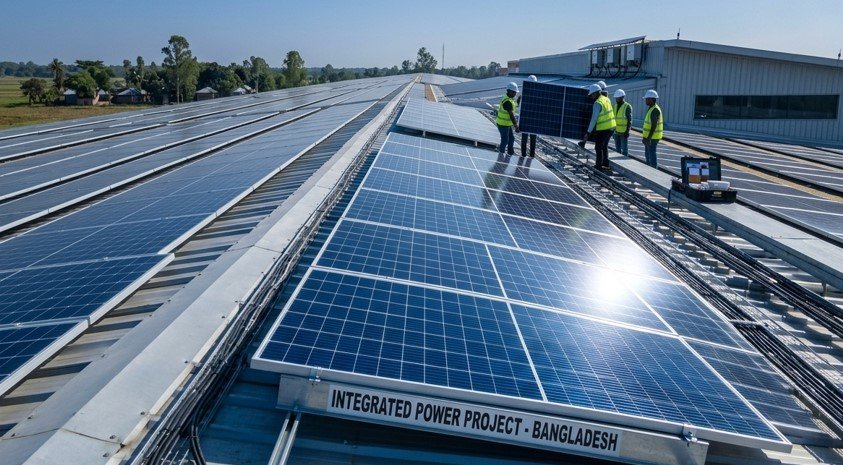
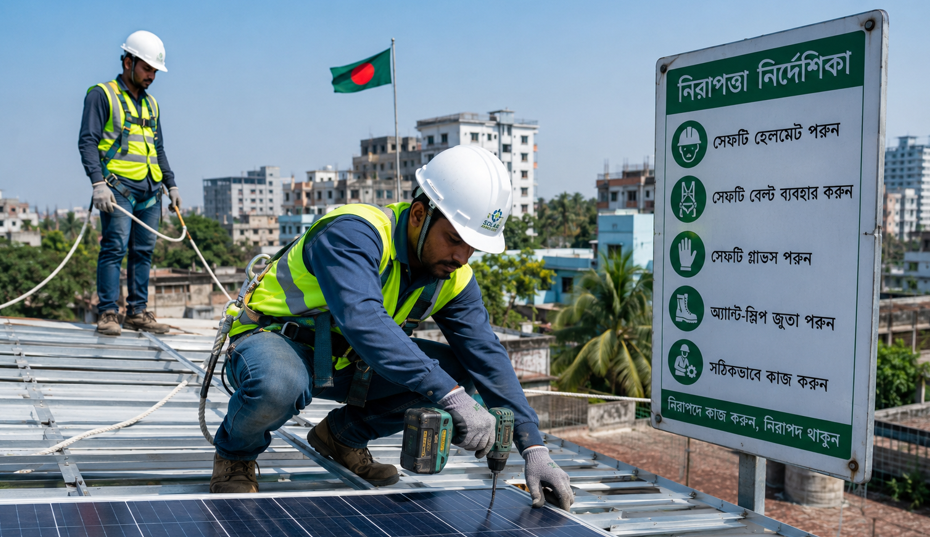
A properly installed system usually accounts for roof angle, structural load capacity, cable routing, and proper grounding. Skipping a structural assessment before mounting panels on an older roof can lead to problems well before the panels themselves wear out. Poor cable routing or loose connections can also introduce power loss that’s easy to miss unless you’re actively monitoring output.
Maintenance, thankfully, is fairly light for this technology:
- Rinse panels with water every few months to clear dust, especially during dry seasons
- Check mounting hardware annually for corrosion or loosening
- Inspect cables and connectors periodically for wear or rodent damage
- Monitor output through an inverter app or monitoring system to catch performance drops early
A quick real-world example helps put the economics in perspective. A household running an 8-panel system at this wattage, generating roughly 10–12 kWh per day, could offset a meaningful chunk of a typical monthly electricity bill — often enough to recover the system’s upfront cost within 5 to 8 years, depending on local electricity rates, sunlight availability, and how well the system is maintained over time.
What to Check Before Buying
Price alone shouldn’t drive the decision. A few things matter more in the long run.
- Certification — look for IEC 61215 and IEC 61730 certification, which confirm safety and performance testing
- Warranty terms — check both the product warranty for defects and the performance warranty for output degradation over time
- Degradation rate — quality panels lose less than 0.5%–0.8% output per year
- Datasheet accuracy — compare the actual datasheet numbers against what the seller verbally promises
- After-sales support — confirm whether the seller offers replacement support if a panel underperforms or fails early
Frequently Asked Questions
How much electricity does a 300 watt solar panel produce per day? Roughly 1.2–1.5 kWh per day under typical Bangladesh sun conditions, though this varies with weather, season, and panel angle.
Is a 300 watt solar panel enough to run a household? On its own, no. Most homes need multiple panels working together, typically 6–10 depending on consumption.
What’s the difference between monocrystalline and polycrystalline versions at this wattage? Monocrystalline panels are more efficient and compact but cost more. Polycrystalline panels cost less but need slightly more roof space for the same output.
How long does a 300 watt solar panel last? Most quality panels carry a 25-year performance warranty, though actual usable life often extends beyond that with gradually reduced output.
Does the price include installation? Usually not. Installation, mounting structure, inverter, and wiring are typically quoted separately from the panel price itself.
Wrapping Up
At the end of the day, a 300 watt solar panel hits a practical sweet spot. Decent cost. Solid efficiency. A size that works for most homes and small businesses across Bangladesh. What actually fits your situation comes down to three things: your roof space, how much electricity you use daily, and your budget. The cheapest price per watt shouldn’t be the deciding factor on its own.
Comparing certified products matters more than chasing the lowest quote. So does checking real datasheet specifications. Confirming warranty terms matters too. A well-chosen system built around this panel size can deliver reliable output for well over two decades, as long as it’s properly installed and maintained.
For most households, that mix of affordability and long-term reliability is exactly what makes this wattage such a popular starting point for going solar.