Introduction
Sunlight only helps when it can actually reach an appliance, and that’s the whole point of a solar panel with battery and inverter setup. It’s what turns raw sunlight into usable electricity around the clock, not just during the hours the sun happens to be out.
This guide gets into how the three pieces work together, what a complete system typically runs, and what to check before committing to one.
By the end, you’ll understand why a panel alone isn’t enough, how battery capacity and inverter type affect real-world performance, and what separates a well-designed system from one that underdelivers. Whether you’re comparing quotes from local installers or trying to figure out what size system actually fits your household, having a clear picture of how these three pieces fit together makes the whole decision far less overwhelming.
Why You Need All Three Components Together
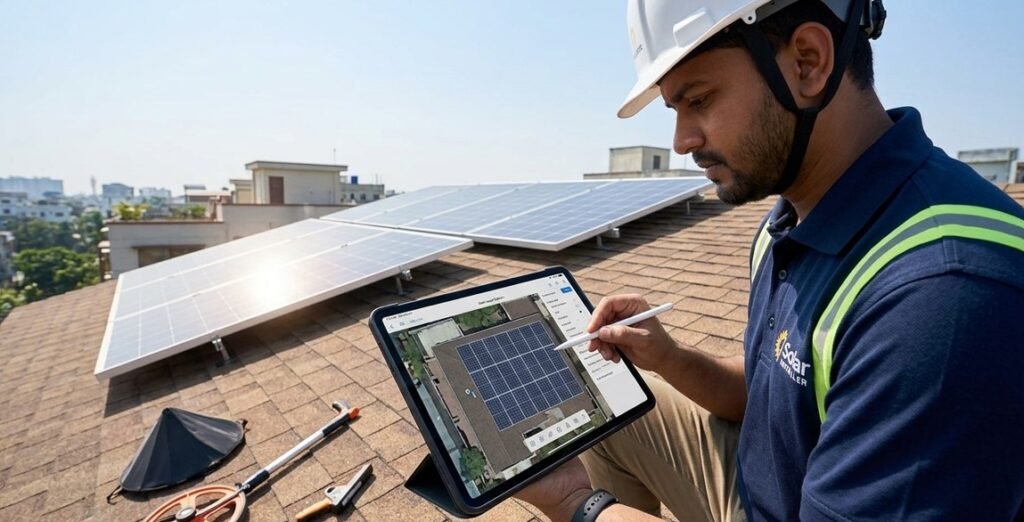
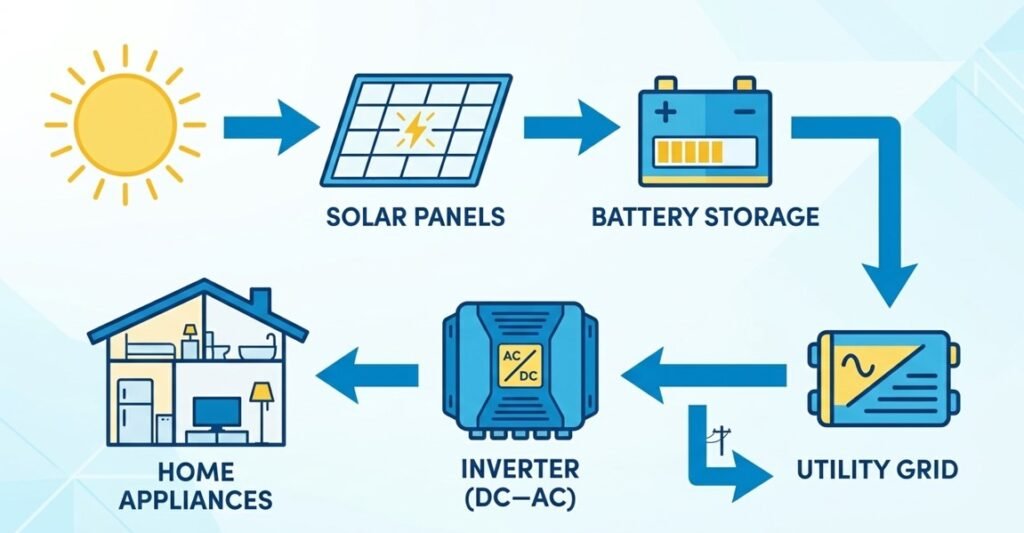
A panel alone only produces power while the sun is up. Without a battery and inverter working alongside it, that energy either gets used immediately or gets wasted. A solar panel with battery and inverter working together solves this — the panel generates DC electricity, the battery stores what isn’t used right away, and the inverter converts that power into the AC your appliances actually run on.
This combination matters most where grid supply isn’t reliable. Bangladesh’s frequent load-shedding is a good example — a panel-only setup goes dark the moment the grid drops, since grid-tied inverters shut off automatically for safety. A system with battery backup doesn’t have that problem.
This happens because of a few things working together:
- Anti-islanding protection — a safety feature that shuts grid-tied inverters off during outages, preventing them from feeding power back into lines utility workers might be repairing
- Battery storage — bypasses that shutoff entirely by supplying power independently of the grid
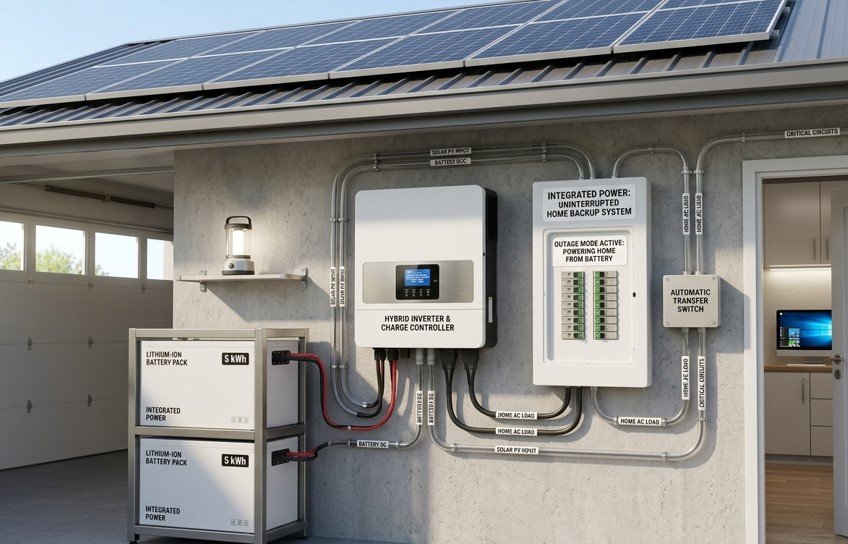
- Automatic switching — hybrid systems detect the outage and switch to battery power within milliseconds, often unnoticed by the user
How Each Component Works
Each part of a solar panel with battery and inverter system plays a distinct role, and knowing where one job ends and the next begins makes both troubleshooting and sizing far easier down the line.
The panel captures sunlight and turns it into direct current (DC) electricity through the photovoltaic effect. The battery stores whatever DC power isn’t used right away, then releases it once the sun goes down or the grid cuts out. The inverter takes that DC power — whether it’s coming straight from the panel or pulled back out of the battery — and converts it into the AC power that standard household appliances actually run on.
A few extra components tie this whole setup together:
- Charge controller — regulates how much power flows into the battery so it doesn’t overcharge
- Battery management system (BMS) — keeps an eye on battery health, temperature, and charge levels, which matters a lot more for lithium setups
- Automatic transfer switch — lets some hybrid systems shift between grid, battery, and solar power without any manual input
- Monitoring app or display — shows generation, consumption, and battery status in real time, so you’re not just guessing how the system’s performing
Types of Inverters Used in These Systems
Inverters aren’t interchangeable — picking the wrong type can quietly cap what the rest of your system is capable of doing.
- Grid-tie inverters — send power straight into the grid, with no backup during outages unless paired with a battery-ready hybrid model
- Off-grid inverters — built to run fully independent of the grid, relying entirely on solar and battery power
- Hybrid inverters — the go-to choice for a solar panel with battery and inverter setup today, since one unit handles solar input, battery charging, and grid connection at once
- Pure sine wave vs modified sine wave — pure sine wave units run sensitive electronics safely, while modified sine wave versions are cheaper but can wear down certain appliances over time
Most homeowners in Bangladesh land on a hybrid inverter in the end, since it covers grid power, solar generation, and battery backup without needing separate hardware for each. Here’s a quick comparison to make the trade-offs clearer:
| Inverter Type | Backup During Outage | Typical Use Case |
| Grid-tie (non-hybrid) | No | Pure bill reduction, no backup needed |
| Off-grid | Yes, fully independent | Remote locations with no grid access |
| Hybrid | Yes, seamless switching | Homes wanting both bill savings and backup |
A hybrid unit costs more than a basic grid-tie inverter. For most households dealing with regular load-shedding, though, that extra cost buys real peace of mind — not just a marginal feature bump.
Battery Options for a Solar Setup
Battery choice drives three things: cost, lifespan, and how much daily cycling the system can handle before it starts degrading.
| Battery Type | Typical Lifespan | Approximate Cost (per kWh) | Best For |
| Lead-acid (flooded) | 3–5 years | Lowest upfront cost | Budget-conscious, occasional backup use |
| Sealed lead-acid (SLA/AGM) | 4–6 years | Slightly higher than flooded | Low-maintenance backup systems |
| Lithium iron phosphate (LiFePO4) | 8–12 years | Higher upfront cost | Daily cycling, long-term value |
| Lithium-ion (standard) | 6–10 years | Mid to high | Compact installs, higher energy density |
Lead-acid still dominates in Bangladesh. It’s simply cheaper upfront. But lithium has been gaining ground fast. Prices are dropping. More buyers are valuing service life over initial savings.
The math actually tends to favor lithium over a long enough stretch. Replacing a lead-acid bank two or three times across fifteen years often costs more than buying lithium once. That’s true even with the higher sticker price.
Depth of discharge is worth understanding before comparing prices head to head. Lead-acid batteries shouldn’t really go below 50% capacity. Do that too often and lifespan drops fast. Lithium can handle 80–90% depth of discharge without that same wear.
In practice, that means a lithium battery rated at the same nominal capacity as a lead-acid one often delivers noticeably more usable energy per cycle.
Sizing a Solar Panel with Battery and Inverter System
Sizing matters more than picking premium components. An undersized system disappoints no matter how good the individual parts are.
Start with actual daily electricity consumption, not a rough guess. A household using 8–10 units (kWh) per day typically needs a panel array in the 2–3 kW range, a battery bank storing at least half a day’s consumption, and an inverter rated to handle peak simultaneous load, not just average use.
A few sizing considerations worth keeping in mind:
- Inverter capacity should clear your highest expected simultaneous load, with some headroom left for motor start-up surges
- Battery capacity should match the backup hours you actually need — not just a round number that sounds convenient
- Panel array size needs to account for system losses, which typically cut real output by 15–20% below rated capacity
- Local sunlight hours matter too — Bangladesh averages roughly 4.5–5 peak sun hours daily, and that directly caps how much a given array can realistically generate
Approximate Cost Breakdown in Bangladesh
Pricing swings a lot depending on battery chemistry, inverter brand, and total system capacity.
| System Component | Approximate Price Range (BDT) |
| 300W–350W solar panel (per unit) | ৳9,000–৳19,000 |
| Hybrid inverter (3–5 kW) | ৳40,000–৳90,000 |
| Lead-acid battery bank (5 kWh) | ৳50,000–৳80,000 |
| Lithium battery bank (5 kWh) | ৳150,000–৳250,000+ |
| Complete 3kW system (with lead-acid) | ৳250,000–৳400,000 |
| Complete 3kW system (with lithium) | ৳400,000–৳600,000+ |
These figures are indicative market ranges, not fixed quotes. Import duties, exchange rates, brand reputation, and installation complexity all shift the final number — sometimes by a wide margin.
Common Applications
A complete solar panel with battery and inverter setup fits a range of use cases beyond just residential rooftops.
- Home backup power — keeps essential loads running through load-shedding or grid outages
- Small businesses and shops — reduces dependence on diesel generators during power cuts
- Remote or off-grid locations — provides primary power where grid connection isn’t available or practical
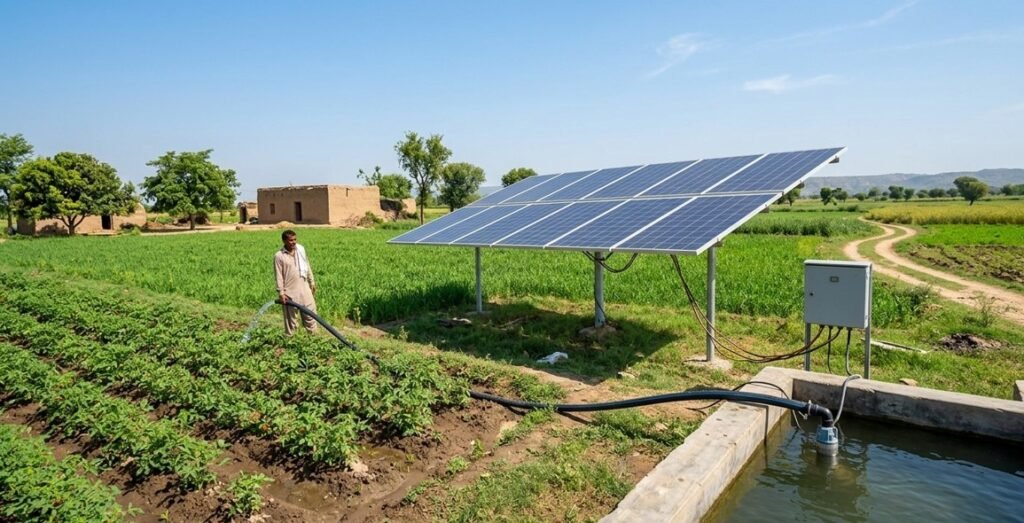
- Agricultural operations — powers irrigation pumps and equipment in areas with unreliable grid access
- Telecom towers and critical infrastructure — ensures uninterrupted operation where downtime isn’t acceptable
What to Check Before Buying a Complete System
Price shouldn’t be the only factor guiding a purchase decision here, since a cheaper system often means compromises that show up later.
- Inverter certification — look for recognized safety certifications and confirm it’s genuinely a pure sine wave unit if that’s what’s advertised
- Battery warranty and cycle life — lithium batteries should specify cycle life (often 2,000–6,000 cycles depending on chemistry), not just years
- System compatibility — confirm the panel, battery, and inverter are actually rated to work together, since mismatched voltage or capacity can reduce efficiency significantly
- Installer experience — ask for references and completed installations, since poor wiring or grounding can create both performance and safety issues
- After-sales support — confirm whether the seller offers maintenance, troubleshooting, and replacement parts locally
Frequently Asked Questions
How long can a battery run my home during a power cut?
It depends on battery capacity and your actual load. A 5 kWh battery running essential appliances might last 4 to 8 hours. Heavier loads drain it faster.
Do I need a hybrid inverter, or will a regular inverter work?
A regular grid-tie inverter won’t give you backup power during outages. If battery backup is part of the plan, a hybrid inverter is generally the only option that works.
How many solar panels do I need for a complete system with battery backup?
For a typical 3kW system, that’s usually around 9–10 panels rated at 300W–350W each. Actual numbers still depend on your consumption and available roof space.
Is lithium battery worth the extra cost over lead-acid?
In most cases, yes. Lithium batteries last roughly twice as long. They also handle deeper discharge cycles better. That often offsets the higher upfront price over the system’s lifetime.
Can a solar panel with battery and inverter system fully replace grid electricity?
It’s possible for smaller loads or off-grid locations. But most residential systems in Bangladesh work as hybrid backup solutions, not full grid replacements. Going fully off-grid needs much larger panel and battery capacity.
Wrapping Up
A solar panel with battery and inverter system buys real independence from grid instability. It’s not just a marginal cut in electricity bills. Getting actual value from one comes down to three things: proper sizing, matching components correctly, and choosing a battery chemistry that fits daily use.
Comparing complete system quotes beats comparing individual component prices. It gives a clearer picture of value. A well-matched system, installed correctly, can deliver dependable backup power for well over a decade. For most Bangladeshi households and small businesses dealing with regular power cuts, that makes the upfront cost worth it.