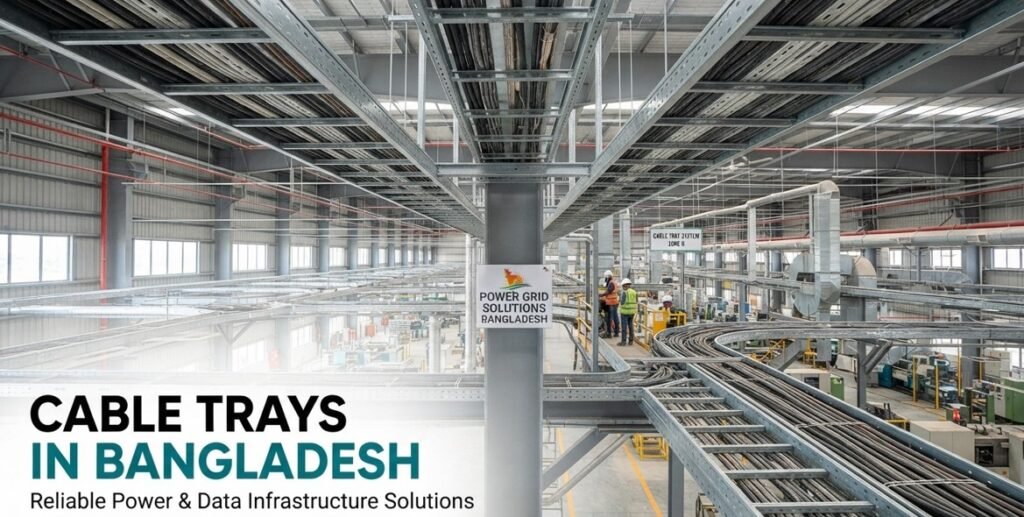
Walk into any modern factory or commercial building in Bangladesh and you’ll usually find cables running overhead in an open metal channel rather than buried inside walls. These are cable trays — support systems that hold power, control, and data cables together along a fixed route instead of letting them run loose through conduit or ceiling space. Engineers favor cable trays because they’re faster to install, easier to inspect, and far simpler to modify later when new equipment or extra wiring needs to be added. Open, ventilated designs also let heat escape more freely, which matters over years of continuous electrical load.
The push toward organized cable management has picked up pace across Bangladesh as RMG factories, pharmaceutical plants, commercial towers, and data facilities keep expanding. Demand for cable trays in Bangladesh has grown right alongside this shift — what used to be treated as an optional extra on a project’s electrical scope is now standard practice, and most consultants simply won’t sign off on a design without cable trays included. Part of the reason is practical: a well-planned tray layout cuts downtime, makes future expansion far less disruptive, and keeps the whole installation aligned with local and international electrical codes.
This guide walks through the common cable tray types, the materials and standards behind them, how pricing plays out in the local market, and what actually matters when choosing and installing a system—whether the project is a single floor or an entire industrial complex.
What Cable Trays Are Used For
A cable tray system carries power, control, and communication cables safely between two points in a facility — from the main distribution panel to individual machines, floors, or rooms. Electricians and engineers choose trays over conduit when a project involves a high volume of cables, frequent future modifications, or heavy industrial loads that need mechanical protection without being fully enclosed.
Cable trays also support proper heat dissipation. Because most tray designs are ventilated or perforated, cables carrying continuous current can shed heat more effectively than cables packed inside a sealed conduit. This matters for long cable runs in factories, hospitals, and data centers, where sustained electrical load is common.
Types of Cable Trays
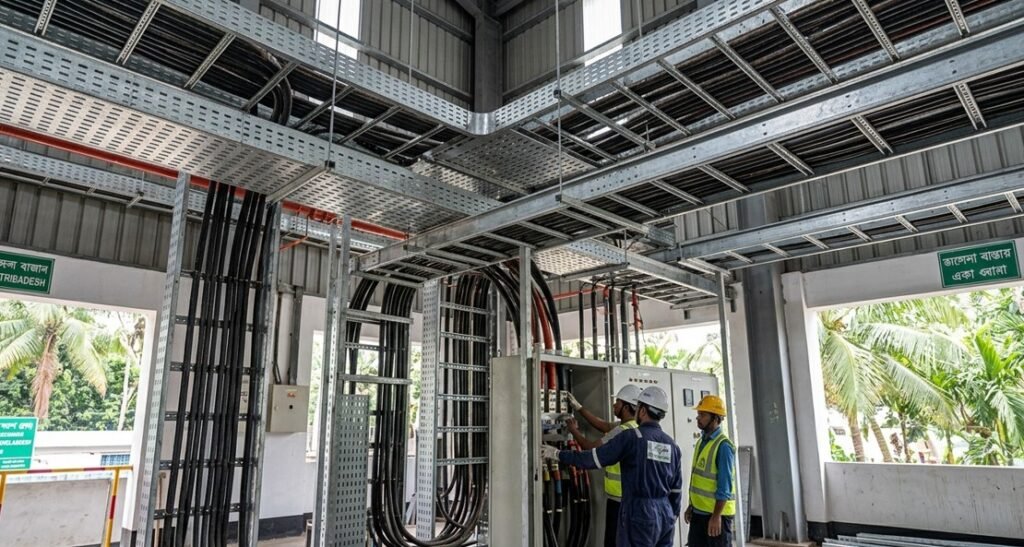
Not every job site needs the same kind of tray. The right choice comes down to how much weight the cables carry, how exposed the run is to dust or moisture, and how tightly packed the cables will be. Here are the five designs that cover most cable trays in Bangladesh and elsewhere:
- Ladder tray — built from two side rails joined by rungs, this is the go-to option for heavy power cables running long distances, since the open rung design makes pulling cable through it much easier.
- Perforated tray — has a solid base punched with holes so air and moisture can pass through; commonly used in commercial buildings where power and control wiring run side by side.
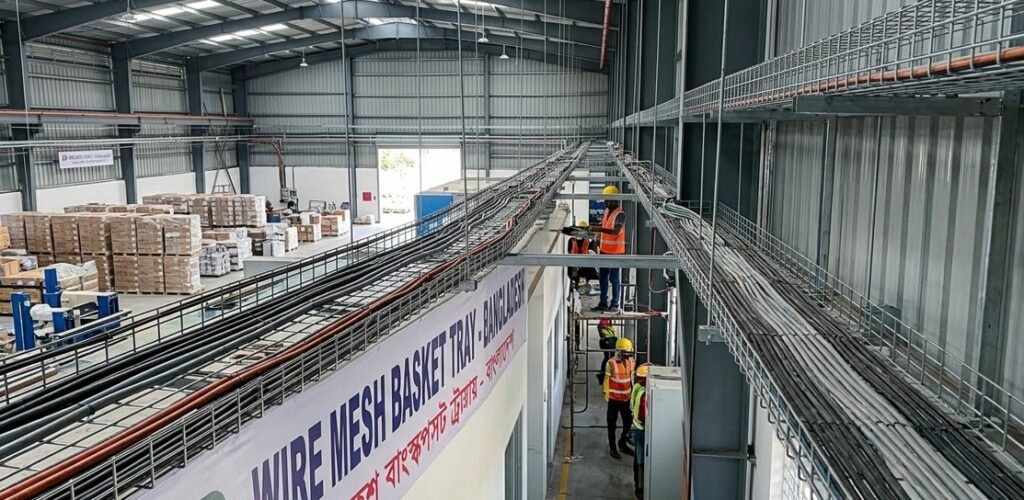
- Wire mesh (basket) tray — made from welded steel wire, so it’s light, easy to cut and reshape on site, and a favorite for IT, telecom, and other low-voltage runs.
- Solid bottom (channel) tray — fully enclosed at the base, giving extra protection to smaller or more sensitive cables that shouldn’t be exposed to dust and debris.
- Trough tray — sits between ladder and solid-bottom designs, offering side protection with a mostly open floor for decent airflow without full exposure.
What They’re Made Of
The material behind a tray matters just as much as its shape, especially given Bangladesh’s humidity and the airborne dust or chemicals common on many factory floors. Choosing the wrong material here is often what shortens a system’s working life.
| Material | Typical Use Case | Corrosion Resistance |
| Galvanized Iron (GI) | General commercial and light industrial buildings | Moderate; suited to indoor, dry environments |
| Hot-Dip Galvanized Steel | Factories, RMG units, outdoor installations | High; holds up against humidity and dust |
| Stainless Steel (SS 304/316) | Pharmaceutical, food processing, chemical plants | Very high; resists chemical vapors and washdown |
| Aluminum | Data centers, lightweight commercial fit-outs | High, naturally corrosion-resistant, low weight |
| FRP / Fiberglass | Chemical processing, coastal or corrosive sites | Excellent; non-conductive, and chemical-resistant |
Cable Tray Standards and Compliance
Picking a tray isn’t just a matter of taste or budget—real technical standards sit behind material thickness, load capacity, and installation practice, and most engineers end up referencing one of two frameworks: NEMA or IEC. NEMA VE 1 lays out the manufacturing side for metal trays—thickness, load classes, and span ratings—while NEMA VE 2 covers the practical side: shipping, handling, and how the system actually gets installed.
Internationally, IEC 61537 serves a similar function, covering cable tray and cable ladder systems used across Europe and Asia. Projects sourcing cable trays in Bangladesh that work with international clients or EPC contractors often see one of these standards specified directly in the tender documents, so it pays to confirm which standard a supplier’s product actually meets before placing an order—not every locally fabricated tray carries formal NEMA or IEC certification.
How the Local Market Looks
The supply side here has grown up a lot over the last decade—it’s no longer just a handful of importers filling orders. Domestic fabricators now work alongside importers to cover projects across the country, with the heaviest concentration of suppliers sitting around Dhaka, Chattogram, Gazipur, and Narayanganj, simply because that’s where most of the factories and commercial development are clustered.
Most of what gets fabricated locally is GI or hot-dip galvanized sheet, while stainless steel and FRP tend to be imported or made to order — these usually go toward pharmaceutical or chemical projects with stricter corrosion requirements. Standard GI orders typically ship within a few days; anything in stainless steel or a large custom span takes noticeably longer.
Matching the Tray to the Project
Getting the spec wrong here is one of the more expensive mistakes to fix later, so it’s worth working through a few things before placing an order:
- Cable load and fill ratio — work out total cable weight and cross-sectional area first, so the tray isn’t overfilled from day one.
- Support span — the further apart the supports, the higher the load class needs to be to keep the tray from sagging.
- Environmental exposure — outdoor, humid, or chemically active spaces call for galvanized, stainless, or FRP rather than plain GI.
- Room to grow — leaving 25–40% spare capacity means new cables can be added later without ripping out and upgrading the whole system.
- Code and client requirements — check upfront whether the project calls for NEMA, IEC, or an in-house engineering standard before locking in an order.
Cable Tray Price in Bangladesh
Pricing for cable trays in Bangladesh depends on width, thickness, material, and finish. The table below gives an approximate starting range for common tray types based on current supplier listings; actual quotes vary by order volume, region, and customization.
| Tray Type | Material | Approximate Price Range (per meter) |
| Perforated GI Tray | Galvanized Iron | ৳500 – ৳900 |
| Ladder Tray | Hot-Dip Galvanized Steel | ৳700 – ৳1,500 |
| Wire Mesh / Basket Tray | Galvanized Steel Wire | ৳400 – ৳1,000 |
| Solid Bottom Tray | Galvanized Steel | ৳600 – ৳1,300 |
| Stainless Steel Tray | SS 304/316 | ৳2,000 and above |
For an accurate quotation, share the single-line diagram (SLD), cable schedule, and route length with suppliers, and ask them to state material grade, thickness, and load class explicitly in the offer—comparing quotes on total system cost, not just per-meter price, avoids surprises once accessories like bends, tees, and supports are added.
Installation Best Practices for Cable Trays
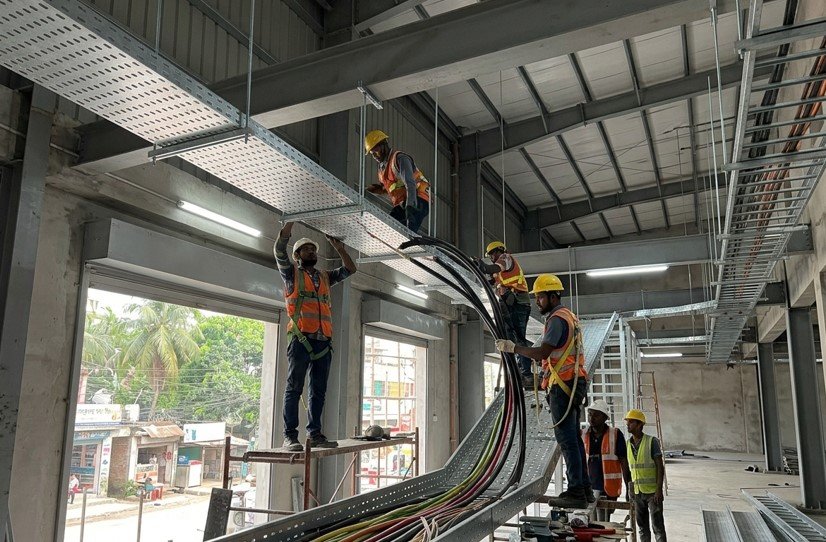
Get the installation right and a tray system will run reliably for decades; cut corners here and it shortens the system’s life while creating real safety risks. A few things are worth getting right on site:
- Keep support spacing correct, based on the tray’s load class and whatever span tables the manufacturer provides.
- Ground every section properly and bond it well, so stray electrical current has nowhere to go.
- Keep power and low-voltage cables apart, using dividers or separate trays to cut down on electromagnetic interference.
- Leave room for maintenance access, especially above and beside the tray where ceiling space is already tight.
- Check welds, bolts, and joints before the system goes live to make sure nothing’s structurally off.
Common Applications of Cable Trays in Bangladesh
By now, this kind of tray system has found its way into nearly every corner of Bangladesh’s industrial and commercial economy:
- RMG and textile mills, where the sheer number of motor, lighting, and control cables would be a mess to manage without some kind of organized routing.
- Pharmaceutical and food processing plants, where the layout has to stay clean and easy to wipe down — not a nice-to-have, but a hygiene requirement.
- Commercial complexes and IT parks, for keeping power and data cabling structured across large, multi-tenant buildings.
- Hospitals and diagnostic centers, where power distribution needs to stay both reliable and easy to service around critical equipment.
- Steel, cement, and other heavy industrial plants, where the trays have to hold up against constant vibration, heat, and dust.
Final Thought
Cable trays quietly do a lot of heavy lifting in a building’s electrical backbone—they’re not glamorous, but a poorly chosen or poorly installed system shows up later as sagging cables, overheating, failed inspections, or expensive retrofits. Getting the type, material, and load class right at the design stage costs far less than fixing it after the fact.
For projects sourcing cable trays in Bangladesh specifically, the buyers who get the best long-term value aren’t the ones chasing the lowest per-meter price—they’re the ones who share a clear BOQ, confirm material and standard compliance upfront, and compare full system quotes rather than just tray cost. That approach keeps both budget and safety in check as the project scales.
Frequently Asked Questions
Why choose a tray system over conduit?
Mostly speed and flexibility—installation goes faster, adding cables later is far less disruptive, and the open design lets heat escape better than a sealed conduit run ever could.
What material holds up best against Bangladesh’s climate?
Hot-dip galvanized steel covers most general industrial needs. For humid, coastal, or chemically exposed sites, stainless steel or FRP tends to last longer despite the higher upfront cost.
What should I budget for pricing?
Standard GI or wire mesh options usually start somewhere around ৳400–৳900 per meter, and costs climb from there once you move into stainless steel or heavy-duty ladder trays.
Does the system need to meet a formal standard?
It depends on the project. EPC contracts and multinational-backed builds often call for NEMA VE 1/VE 2 or IEC 61537 compliance specifically, so it’s worth checking with the supplier before signing off on an order.
Getting the type, material, and supplier right from the start pays off well beyond the initial install — it’s usually the difference between a system that runs quietly for fifteen years and one that needs rework within five.