Introduction
A monocrystalline solar panel is the most efficient type of panel you can put on a roof today, and it’s the one most homeowners and businesses end up choosing once they compare their options. This guide explains how these panels work, how they stack up against other types, what they cost, and what to check before you buy.
You’ll also get straight answers to the questions people ask most, plus a look at how Integrated Power helps customers pick a system that actually fits their roof, budget, and energy use.
What Is a Monocrystalline Solar Panel?
A monocrystalline solar panel is made from a single, continuous crystal of silicon. The manufacturer grows a large silicon ingot, slices it into thin wafers, and wires those wafers into a panel. Because each cell is one pure crystal, electrons move through it with very little resistance.
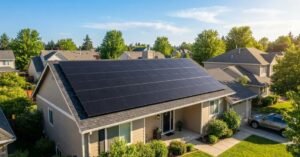
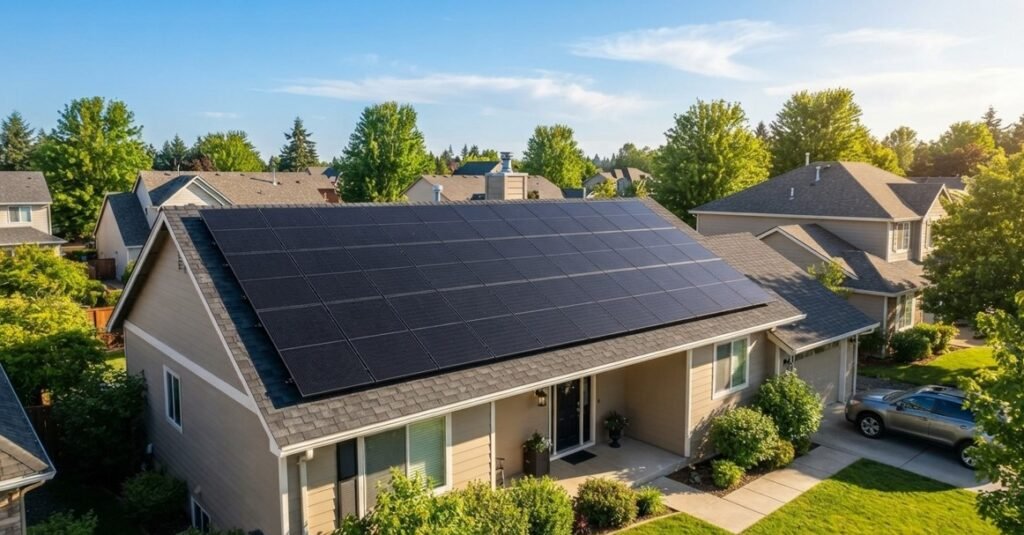
That purity is why these panels are easy to spot. The cells are dark black, often with rounded corners, and the whole panel has a uniform, sleek look that many people prefer on a visible roof.
How Does It Turn Sunlight Into Power?
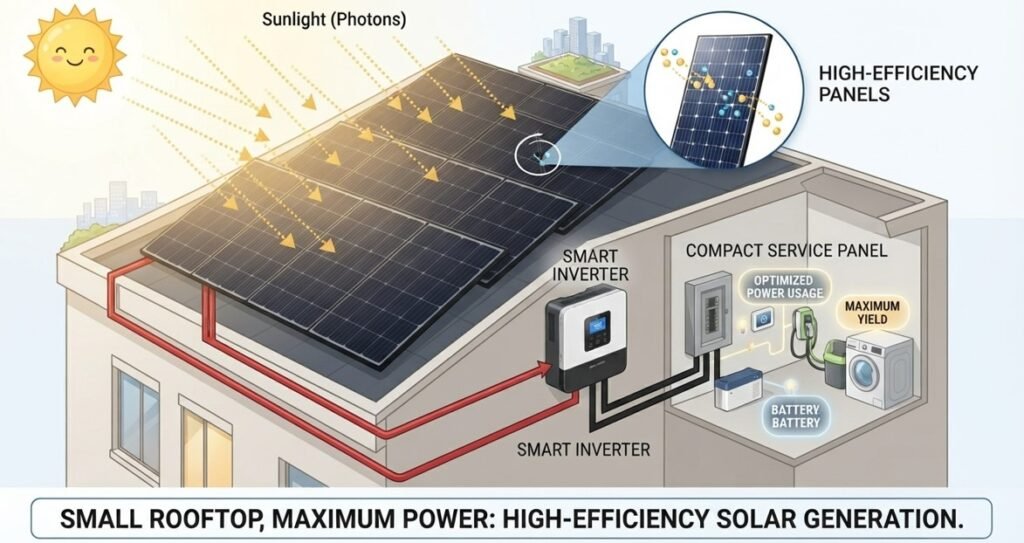
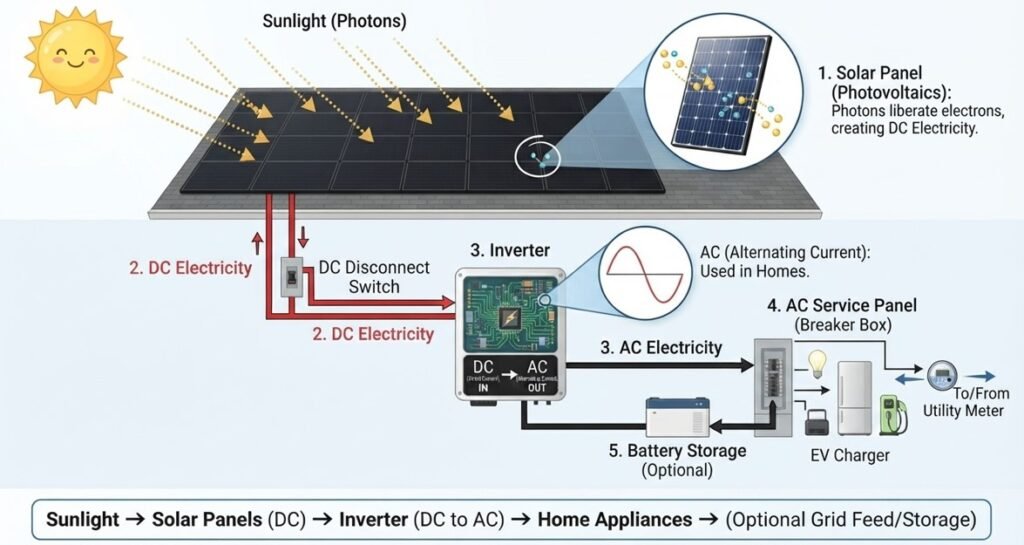
Sunlight hits the silicon cells and knocks electrons loose. Those moving electrons create direct current, and an inverter converts it into the alternating current your home or business actually uses.
The single-crystal structure gives electrons a clean path, so more of the sunlight that lands on the panel becomes usable electricity. Most modern residential panels of this type convert roughly 20% to 23% of sunlight, according to figures published by the U.S. Department of Energy.
Heat matters too. Every panel loses a little output as it gets hotter, and the rate of that loss is called the temperature coefficient. Panels with a better coefficient hold up well on scorching afternoons, which is exactly when many buildings use the most power for cooling.
Key Benefits of a Monocrystalline Solar Panel
Here’s why so many buyers land on this technology:
- Highest efficiency of the common panel types, so you need fewer panels for the same output
- Better use of limited roof space
- Strong performance in hot weather and low light compared with older designs
- Long working life, often 25 to 30 years
- Slow degradation, usually well under 1% output loss per year
- Clean, uniform black appearance
None of these points matter equally to everyone. A large open field cares less about roof space, while a small city rooftop cares a lot.
Monocrystalline vs Polycrystalline vs Thin-Film
The three main technologies differ in efficiency, cost and looks. This table shows the trade-offs at a glance.
| Feature | Monocrystalline | Polycrystalline | Thin-Film |
| Typical efficiency | 20% – 23% | 15% – 18% | 10% – 13% |
| Typical lifespan | 25 – 30 years | 20 – 25 years | 10 – 20 years |
| Space needed | Least | Moderate | Most |
| Upfront cost | Higher | Lower | Lowest |
| Appearance | Uniform black | Blue, speckled | Flat, varies |
| Best for | Limited roofs, long-term value | Tight budgets, roomy sites | Large flat installations |
For most rooftops, the extra efficiency is what justifies the higher sticker price.
Monocrystalline Solar Panel Price: What Should You Expect to Pay?
The price depends on wattage, brand, warranty and your local market. Prices also keep shifting as manufacturing costs change, so treat any figure as a ballpark rather than a quote. This table gives a rough guide for panels only, before installation.
| Panel Size | Typical Wattage | Approx. Price Range (USD) |
| Small / portable | 100 – 200 W | 80 – 200 |
| Standard residential | 350 – 450 W | 150 – 300 |
| High-output commercial | 500 – 600 W | 200 – 350 |
Installed system costs are higher since you also pay for the inverter, mounting, wiring, permits, and labor. Trackers such as NREL publish regular benchmarks if you want to compare against wider market data.
What Affects the Price?
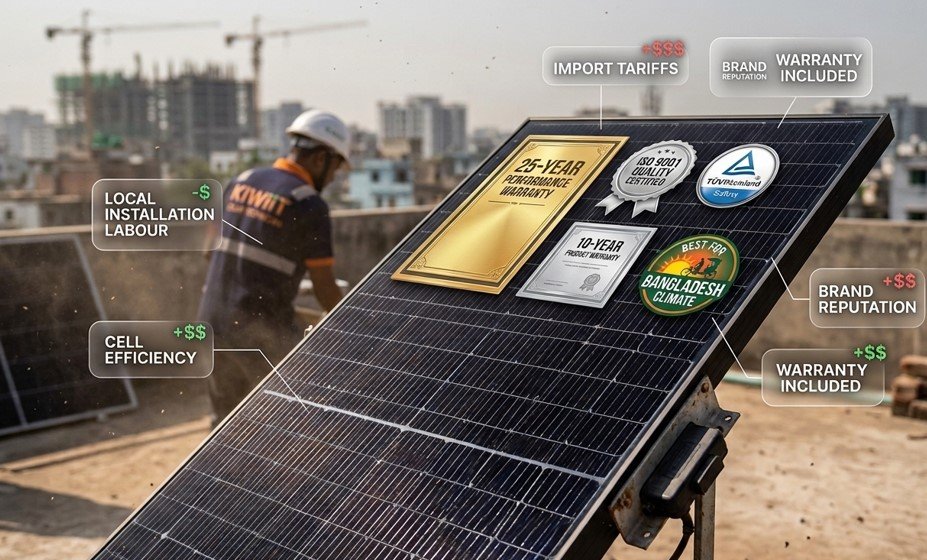
Two panels with the same wattage can still cost very differently. These are the main reasons:
- Brand reputation and manufacturing quality
- Panel efficiency and power output
- Length and terms of the product and performance warranties
- Cell technology, such as PERC or half-cut cells
- Order size, since bulk purchases usually lower the per-panel price
- Shipping, import duties, and local taxes
The cheapest panel isn’t always the cheapest choice. A weak warranty or faster degradation can cost more than the savings.
A Simple Real-World Example
Picture a home with a compact roof that only fits about 12 panels. With lower-efficiency panels, that roof might produce enough for half the household’s usage. Swap in higher-efficiency panels, and the same 12 spots can cover most of the bill.
That’s the real advantage. You aren’t buying a fancier panel for its own sake. You’re getting more energy out of the space you already have, and roof space is the one thing you can’t add later.
What Does Installation Involve?
Installation is more straightforward than most people expect. A typical project runs in stages, and the whole thing often wraps up within a few days once permits are approved.
First comes a site survey, where the installer checks your roof angle, shading and electrical setup. Then the team designs the layout, orders equipment and files any required paperwork. On installation day, they mount the rails, fix the panels, connect the inverter and test the system before switching it on. Afterwards, you’ll usually get a monitoring app so you can watch production day by day.
Environmental and Financial Upsides
Beyond the savings, solar cuts the carbon footprint of your electricity use. Over 25 years, even a small system avoids a large amount of emissions compared with grid power from fossil fuels.
Financially, many regions offer incentives, tax credits, or net metering that pays you for surplus power. These programs change often, so check current rules on an official source such as the International Energy Agency or your local energy authority before you plan around them.
Is It Worth the Investment?
Usually, yes, if you plan to stay in the building for several years. Higher efficiency means more power from the same roof, and a longer lifespan means more years of savings.
Payback periods vary a lot with electricity rates, sunlight and incentives. Many systems pay for themselves in about 5 to 10 years, then keep producing power for another 15 or more. Run the numbers for your own usage before you commit.
Who Should Choose a Monocrystalline Solar Panel?
This type suits some situations better than others. It tends to work best for:
- Homes with small or shaded roofs where every square meter counts
- Businesses that want maximum output from limited rooftop space
- Owners who plan to keep the property for 10 years or longer
- Buyers who care how the system looks from the street
- Anyone in a hot climate who wants stable performance
If you have acres of free land and a tight budget, a cheaper panel type may make more sense.
Specs to Check Before You Buy
Datasheets can look intimidating, but only a few lines really matter. Use this table as a checklist.
| Spec | What It Tells You | What to Look For |
| Efficiency | How much sunlight becomes power | 20% or higher |
| Power output (W) | Capacity of a single panel | Matches your roof layout |
| Temperature coefficient | Output loss in heat | Closer to -0.3% per °C is better |
| Degradation rate | Yearly output loss | Below 0.5% per year |
| Product warranty | Coverage for defects | 12 years or more |
| Performance warranty | Guaranteed output over time | 25 years or more |
Ask for the full datasheet and compare panels using the same numbers.
Common Mistakes When Buying Solar Panels
Most regrets come from a handful of avoidable errors:
- Comparing only the price per panel instead of the price per watt
- Ignoring the warranty terms and the manufacturer’s financial stability
- Skipping a roof and shading assessment before choosing a system size
- Mixing panels with a badly matched inverter
- Choosing an installer on price alone, without checking past projects
A short site visit from a qualified team usually catches these problems early.
How to Keep Your Panels Performing
Maintenance is light, but it isn’t zero. A few simple habits protect your output:
- Rinse dust, bird droppings and leaves off the surface a few times a year
- Trim any branches that have started to cast shade
- Check your monitoring app for sudden drops in production
- Have the wiring and inverter inspected once a year
- Avoid harsh chemicals or abrasive tools when cleaning
Most systems run quietly for years with just this.
Common Questions About Mono Solar Panels
Q: Is mono better than polycrystalline?
A: In efficiency and lifespan, yes. Polycrystalline still wins on upfront cost, so the better pick depends on your space and budget.
Q: How long do these panels last?
A: Most last 25 to 30 years, and many still produce around 85% to 90% of their original output at the end of that period.
Q: Do these panels work on cloudy days?
A: They do, just at lower output. Their efficiency helps them hold up better than lower-grade panels in weak light.
Q: Why is the monocrystalline solar panel price higher?
A: Growing a single pure crystal takes more energy and produces more waste silicon, which raises manufacturing cost. You’re paying for higher efficiency.
Q: How many panels does a typical home need?
A: It depends on your monthly usage and sunshine, but many homes land between 15 and 25 panels. A proper energy audit gives a firm number.
Why Choose Integrated Power for Your Solar Project
Integrated Power designs and installs solar systems around what each customer actually needs, not a fixed package. The team starts with your electricity bills, roof layout and budget, then recommends the right panel type and system size.
For many customers, that means a monocrystalline solar panel setup, because it delivers the most power from the space available. Where a cheaper option fits better, they’ll say so. You get clear quotes, proper installation and support after the system goes live.
Conclusion
A monocrystalline solar panel costs more upfront than most alternatives, but it repays that with higher output, a longer life and a cleaner look. Compare panels by price per watt, check the warranty carefully, and make sure your installer has assessed your roof before you sign.
If you’re weighing your options, Integrated Power can walk you through the numbers and build a system that fits. Get in touch for a personalised quote.