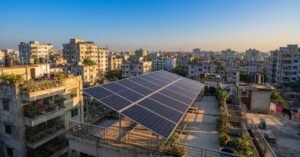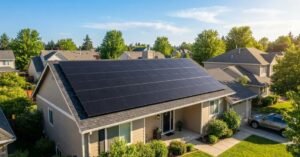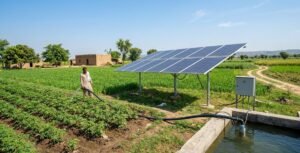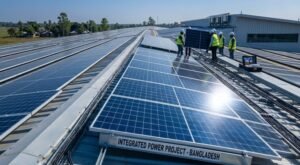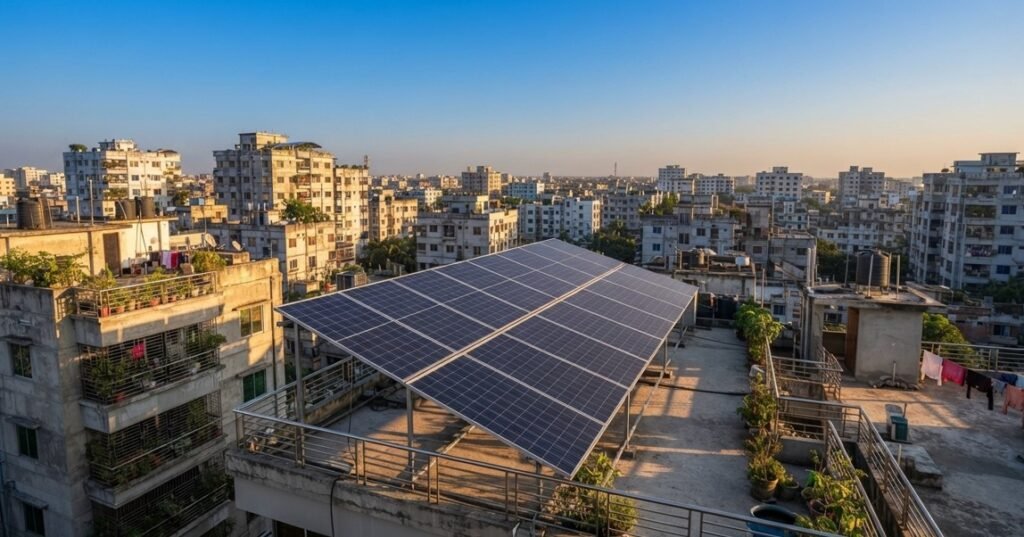
Rooftop solar panel installation in Bangladesh has moved from a niche idea to a practical way to cut electricity bills. Homes, factories, schools, and shops now use their empty roofs to produce power.
With tariffs rising and load shedding still a problem in many areas, more owners are asking the same thing: is it worth it for my building? Most of them find that a well-planned system pays for itself within a few years and keeps saving for 25 years or more.
This guide comes from the integrated-power team, who work with homeowners, shop owners, and factories on solar projects. Here is what you will get:
- How much a rooftop system costs in BDT
- How net metering works
- The step-by-step installation process
- Common mistakes to avoid
- Straight answers to common questions
Whether you own a small flat roof or a large factory shed, the sections below will help you decide with confidence.
Why Rooftop Solar Panel Installation in Bangladesh Makes Sense
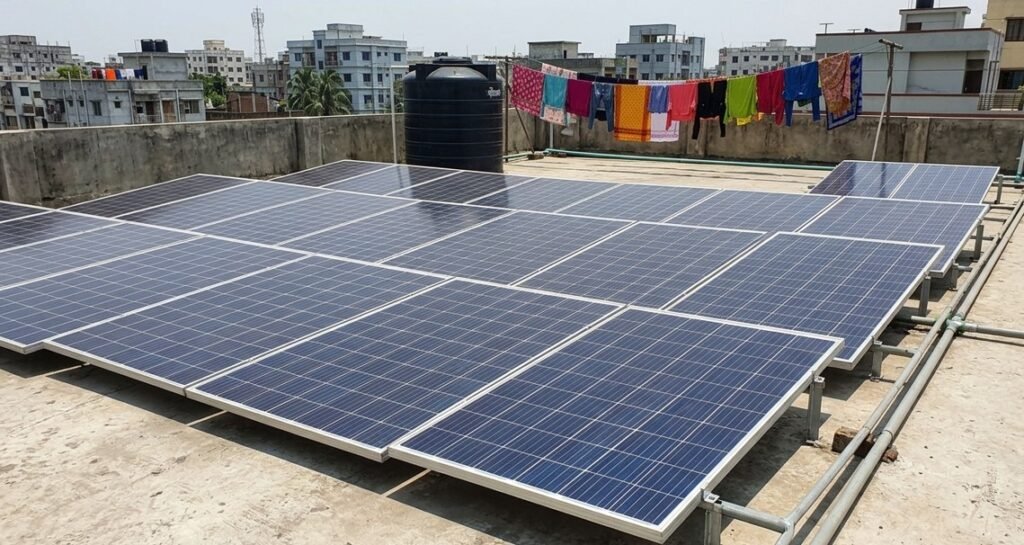
Bangladesh gets strong sunlight for most of the year. On average, a well-placed panel receives around 4 to 5 peak sun hours a day. That is enough to produce real savings.
Grid tariffs have also gone up over the years, and load shedding still hits many areas. A rooftop system gives you a second source of power that costs nothing to fuel.
The government has pushed the sector forward too. The Sustainable and Renewable Energy Development Authority (SREDA) runs the net metering framework, and IDCOL has financed millions of solar systems across the country. The International Energy Agency has noted that solar is adding new capacity faster than any other source of electricity, and South Asian countries are a big part of that growth.
People usually switch to solar for a few practical reasons.
- Your monthly electricity bill drops, often by more than half for homes with good sunlight
- The system keeps some lights, fans and the fridge running during outages if you choose a hybrid setup
- You burn less diesel or octane in a generator, which saves money and cuts the noise
- Good panels keep working for 25 years or more, so the savings last
- Any extra units you produce can go back to the grid through net metering and reduce your next bill
How Much Does a Rooftop Solar System Cost?
Price depends on system size, panel brand, inverter type and roof condition. The table below shows indicative ranges for grid-connected systems. These are estimates, so ask for a site-specific quote.
| System Size | Roof Area Needed | Monthly Output (approx.) | Estimated Cost (BDT) |
| 3 kW | 300 sq ft | 350–400 units | 1,80,000 – 2,40,000 |
| 5 kW | 500 sq ft | 600–650 units | 3,00,000 – 4,00,000 |
| 10 kW | 1,000 sq ft | 1,200–1,300 units | 6,00,000 – 8,00,000 |
| 50 kW | 5,000 sq ft | 6,000+ units | 28,00,000 – 38,00,000 |
A simple rule helps. One kilowatt of panels usually needs around 100 square feet and produces about 4 units a day.
Most owners recover the cost in 5 to 7 years. After that, the electricity is almost free.
What Affects the Final Price?
Two quotes for the same system size can differ by a lot. The gap usually comes from a few things you cannot see on the quotation at first glance.
- Tier-1 panels cost more upfront, but they lose output more slowly over the years
- A good inverter matters more than most buyers expect, since it is the part most likely to fail first
- A tin shed and a concrete slab need different mounting structures, so the roof type changes the price
- Proper earthing and surge protection add some cost, but they protect the whole system during lightning and voltage spikes
- Cheap work often means expensive repairs later.
Never choose on price alone. A system that fails in year three costs more than one built properly.
Choosing Between On-Grid, Off-Grid and Hybrid Systems
Many first-time buyers get stuck here. Each type suits a different need.
| Feature | On-Grid | Off-Grid | Hybrid |
| Needs battery | No | Yes | Yes |
| Works during load shedding | No | Yes | Yes |
| Net metering possible | Yes | No | Yes |
| Upfront cost | Lowest | Highest | Medium to high |
| Best for | Offices, factories, homes with stable grid | Remote areas | Homes and shops with frequent outages |
An on-grid system shuts down when the grid fails. This is a safety feature, not a fault, and many owners are surprised by it.
If power cuts are common where you live, a hybrid system is usually worth the extra money.
Net Metering Explained in Simple Terms
Net metering lets you send extra electricity back to the grid. Your meter records what you export and what you import. At the end of the month, you pay only for the difference.
Say your panels make 500 units in a month and you use 450. You export 50 extra units, which are credited against future bills.
The rules are set by SREDA and the distribution companies. System size is linked to your sanctioned load, and approval is needed before connection. Check the latest guideline on the SREDA website before you apply, because policies get updated.
Step-by-Step Process of Rooftop Solar Panel Installation in Bangladesh
The whole job is easier than most people expect. Here is the usual timeline.
| Step | What Happens | Typical Time |
| 1. Site survey | Engineer checks roof strength, shade and direction | 1 day |
| 2. System design | Size, layout and savings are calculated | 2–3 days |
| 3. Approval | Net metering application and utility paperwork | 2–4 weeks |
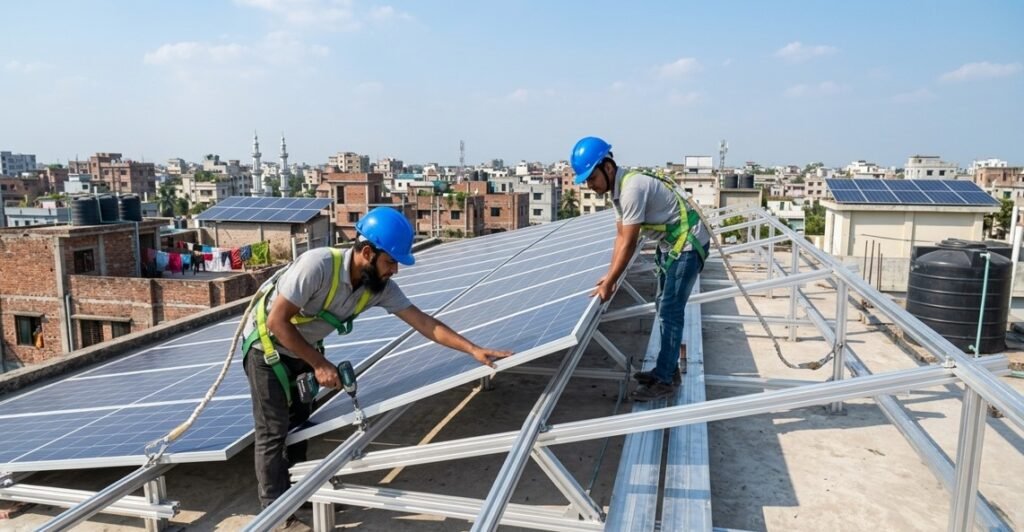
| 4. Installation | Mounting, panels, inverter and wiring | 3–7 days |
| 5. Testing | Safety checks and grid connection | 1–2 days |
| 6. Handover | Training, warranty papers and monitoring setup | 1 day |
Approval is the slowest part, so start paperwork early. The physical installation for a home usually finishes within a week.
A Real-World Example
Consider a three-story building in Dhaka with a monthly bill of about BDT 12,000. The owner installed a 5 kW on-grid system on the roof.
The system now produces around 600 units a month. The bill dropped to a small fixed charge in sunny months. In the rainy season, savings are lower, but the yearly average still stays strong.
Cases like this are why rooftop solar panel installation in Bangladesh is growing among both homeowners and small businesses.
Common Mistakes to Avoid
A few errors show up again and again:
- Installing panels where a tree or tall building casts shade
- Buying unbranded inverters to save a little money
- Skipping the roof strength check on old buildings
- Ignoring warranty terms in writing
- Starting work before getting utility approval
Shade is the biggest silent problem. Even a small shadow on one panel can reduce the output of the whole string.
Maintenance: Keeping Your System Efficient
Solar panels have no moving parts, so upkeep is light. Dust is the main enemy in Bangladesh, especially in the dry season.
Clean the panels with water and a soft cloth every two to four weeks. Do it early in the morning, when the glass is cool. Check the inverter display monthly, and book a professional inspection once a year.
With basic care, panels keep producing 80 percent or more of their original output after 25 years.
Why Choose integrated-power?
When you plan Rooftop Solar Panel Installation in Bangladesh with integrated power, you get a team that handles design, approval, and installation under one roof. You do not have to chase separate vendors.
We begin with an honest site survey. If your roof is not suitable, we tell you so. If a smaller system fits your usage better, we recommend that instead of selling you more than you need.
You also get written warranties, clear pricing, and after-sales support that does not disappear once the panels are up.
Frequently Asked Questions
How long does Rooftop Solar Panel Installation in Bangladesh take?
The physical work takes 3 to 7 days for most homes. Net metering approval can add a few weeks, so plan about one month in total.
Can solar panels run my AC and fridge?
Yes, if the system is sized correctly. A 5 kW system can support a typical family’s daily load, including one or two air conditioners during the day.
Do solar panels work in the rainy season?
They do, but at lower output. Cloudy days can cut production by 30 to 60 percent, which is why yearly averages matter more than daily numbers.
Is financing available?
Yes. Several banks and financial institutions offer green financing or refinancing schemes through Bangladesh Bank. Ask your installer which options apply to your project.
What is the lifespan of a solar panel?
Most panels carry a 25-year performance warranty. Inverters usually last 8 to 12 years and may need replacing once.
Is net metering mandatory?
No, but it is the only way to earn credit for the extra power you produce. Without it, any surplus is simply wasted.
Wrapping Up
Rooftop solar panel installation in Bangladesh pays for itself within a few years and keeps saving long after that. The key is to size the system properly, pick quality equipment, and get utility approval before you start.
Visit your roof, check your last six electricity bills, and decide whether you want backup power or just lower bills. Those two answers shape everything else.
If you want a clear plan, the integrated-power team can survey your roof and send a written quote with expected savings. Send us your location and monthly bill, and we will take it from there.