Substation Equipment for Industrial Projects decides how safely, reliably, and affordably your plant receives and uses electrical power. Whether you are building a new factory, expanding a production line, or adding a data hall, the substation is where grid power becomes usable power. This guide explains the main components, the standards that apply, current lead-time numbers, and a simple way to choose the right setup.
You will also find four comparison tables, practical checklists, and short answers to common buyer questions. Integrated-power prepared this article in plain language so project managers, engineers, and procurement teams can all use it.
What Counts as Substation Equipment for Industrial Projects?
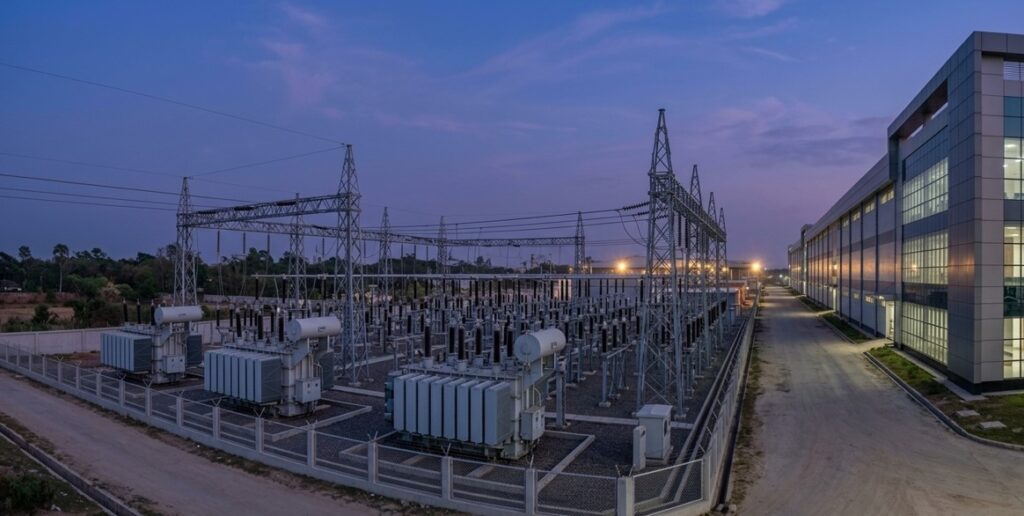
A substation is a group of devices that changes voltage, protects circuits, and distributes power safely. In a factory or plant, it usually sits between the utility feed and your own loads, such as motors, furnaces, compressors, and process lines.
Each device has a clear job, and one weak link can stall the whole system. The table below shows the main pieces.
| Equipment | What It Does | Why It Matters |
| Power transformer | Steps voltage up or down | Sets site capacity and is often the longest-lead item |
| Switchgear | Switches, isolates, and protects circuits | Keeps faults contained |
| Circuit breaker | Interrupts fault current | Protects people and assets |
| Instrument transformers (CT/VT) | Scale current and voltage for measurement | Feed accurate data to relays |
| Protection relays | Detect faults and trip breakers | Cut outage time |
| Control and SCADA | Monitor and operate the substation | Give operators remote visibility |
| Earthing and surge arresters | Divert fault and lightning energy | Safeguard equipment and staff |
Why Industrial Plants Need a Well-Planned Substation
Industrial loads are heavy and sensitive. A voltage dip can trip a production line, and a single outage can ruin raw material within minutes. A properly designed substation reduces that risk.
Imagine a plant adding a second production line. If the first substation had spare bays and capacity, the upgrade would take weeks. If it did not, the plant may wait years for a new transformer.
A good substation helps you:
- Keep voltage stable for sensitive machines
- Isolate faults without shutting down the whole plant
- Meet utility connection requirements
- Add loads or production lines later
- Protect staff from electrical hazards
Key Equipment Explained
Power Transformers
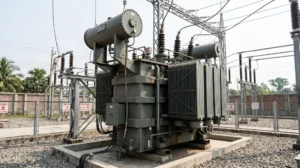
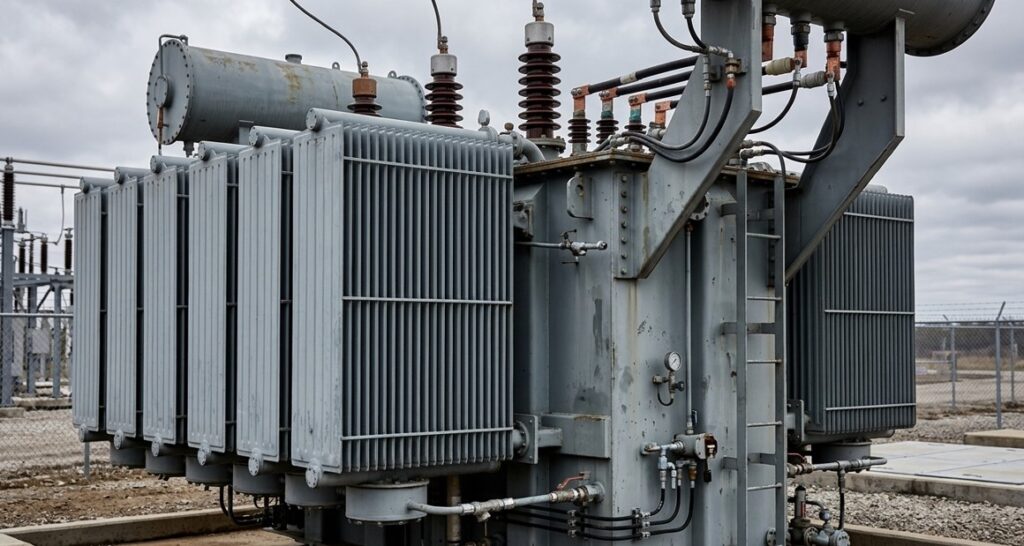
The transformer sets how much power your site can draw. The U.S. Department of Energy treats units of 100 MVA or larger as large power transformers, although many industrial plants use smaller sizes. Either way, ratings and test requirements flow into the civil design, protection scheme, and commissioning plan.
Switchgear and Circuit Breakers
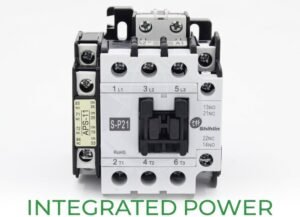
Switchgear groups breakers, switches, and busbars in one enclosure. Medium-voltage metal-clad designs are common in industrial plants.
Breakers must match the site’s fault level. A unit rated too low can fail at the exact moment it is needed.
Protection, Control, and Monitoring
Relays and control systems work like the nervous system of the substation. They detect abnormal current, trip the right breaker, and send data to operators. Modern digital relays also record events, which speeds up fault analysis.
Check these points before approving the protection scheme:
- Does the coordination study cover all feeders?
- Are the communication protocols compatible with your SCADA?
- Is there backup protection for critical circuits?
- Can the system support remote monitoring?
Choosing the Right Substation Type
Most industrial sites choose between three layouts. Each has trade-offs in space, speed, and cost.
| Type | Space Needed | Installation Speed | Best For |
| Air-insulated (AIS) | Large footprint | Slower | Sites with open land and tight budgets |
| Gas-insulated (GIS) | Compact | Moderate | Dense, indoor, or space-limited sites |
| Prefabricated (packaged) | Small to medium | Fastest | Remote or fast-track projects |
Prefabricated units follow IEC 62271-202, which covers factory-built substations for voltages above 1 kV and up to 52 kV. Factory testing shortens site work and reduces surprises. standards
Site conditions matter too. Heat, dust, humidity, and altitude all affect ratings and enclosure choices, so share them with your supplier early.
Lead Times and Market Numbers You Should Know
Planning now starts with the calendar. Wood Mackenzie reported that transformer lead times rose from around 50 weeks in 2021 to about 120 weeks on average in 2024, with large substation and generator step-up units ranging from 80 to 210 weeks.
Demand explains the squeeze. Generator step-up transformer demand rose 274% between 2019 and 2025, while substation transformer demand climbed 116%.
| Equipment | Reported Lead Time | Context |
| Generator step-up transformers | 160+ weeks by Q1 2026 | Up from an average of 143 weeks in 2024 |
| High-voltage circuit breakers | About 125 weeks in late 2025 | Up from 77 weeks in 2023 |
| Switchgear | About 44 weeks on average | Survey average |
| Distribution transformers | About 30 weeks on average | Down from a peak above 100 weeks in 2023 Please ensure Javascript is enabled for purposes of website accessibility +6 |
These numbers mean one thing for substation equipment for industrial projects: the order date drives the energization date. One industry report advises specifying and contracting long-lead equipment earlier and treating vendor capacity as a planning constraint. Prices are moving too, and one estimate suggests transformer costs could rise 4% to 10% over the next year.
Practical ways to protect your schedule:
- Order transformers and breakers first
- Ask vendors about spares, bushings, and field service
- Lock factory test dates early
- Consider refurbished or standardized designs where suitable
- Keep design changes under strict control
Standards and Compliance Basics
Standards keep equipment safe and compatible. For substation equipment for industrial projects, two families matter most: IEEE C37 for switchgear and the IEC 62271 series for high-voltage switchgear and controlgear.
| Standard | Scope | Typical Use |
| IEEE C37.121 | Guide for unit substation switchgear requirements | Unit substations in North America |
| IEC 62271-202 | Prefabricated substations from 1 kV up to 52 kV | Packaged, factory-built substations |
| IEC 61850 | Digital communication inside substations | Relays, control, and SCADA Active Standard +2 |
Local grid codes and utility specifications also apply, so confirm them early with your utility and a qualified engineer.
The supply chain has a policy side as well. A 2023 GAO report named rising manufacturing lead times, limited capacity, and labor and material shortages as key challenges for large power transformers.
How to Plan Your Procurement
How to Select Substation Equipment for Industrial Projects
Start with the load, not the catalog. Calculate peak demand, future growth, and fault level, then match equipment ratings to those numbers.
Use this checklist:
- Define load, growth, and fault levels
- Confirm the utility connection voltage and metering rules
- Choose an AIS, GIS, or prefabricated layout
- Compare vendors on testing, spares, and service
- Plan commissioning and operator training
Mistakes to Avoid
Some projects lose months to avoidable errors. One industry analysis notes that the transformer order may have to come before the project is formally approved. Others stumble on basics.
- Ordering long-lead items after project approval
- Undersizing for future growth
- Ignoring heat, dust, and humidity
- Skipping factory acceptance tests
- Choosing on price alone
How integrated-power Supports Your Project
Most substation delays trace back to a few missing details. The fault level was never confirmed, or the transformer was sized for today’s load and nobody planned for next year. integrated-power starts with those basics.
Send us your load, incoming voltage, site conditions such as heat, dust, and altitude, and your target energization date. From there, the team can shortlist Substation Equipment for Industrial Projects that fits your plant, instead of handing you a catalog and leaving you to guess.
A licensed engineer and your utility still need to approve the final design. That step cannot be skipped.
Frequently Asked Questions
How do I choose substation equipment for industrial projects?
Start with your peak load, growth plan, and fault level. Then match transformer, switchgear, and protection ratings to those numbers and confirm utility requirements.
Which item has the longest lead time?
The transformer, almost every time. Large substation units have been reported at anywhere from 80 to 210 weeks. Since everything else waits on it, place that order before the rest.
Should I choose AIS or GIS?
It mostly comes down to land. If you have open space and a tight budget, AIS is usually cheaper. If the site is crowded or the substation has to sit indoors, GIS takes far less room.
Do prefabricated substations save time?
In most cases they do. The unit is built and tested at the factory, so your crew spends less time on site and fewer problems show up during commissioning.
How early should I place orders?
As soon as the main ratings are fixed. In some cases, buyers reserve production slots before final project approval.
Final Thoughts
Substation Equipment for Industrial Projects is more than a list of machines. It is a system of transformers, switchgear, protection, and controls that must fit your load, your site, and your schedule.
The biggest shift today is timing. Long lead times mean early decisions, clear specifications, and careful vendor selection now matter as much as price. Use the tables and checklists in this guide, involve a qualified engineer from day one, and lock in your long-lead items early.
If you need help matching equipment to your project, integrated-power is ready to guide you.